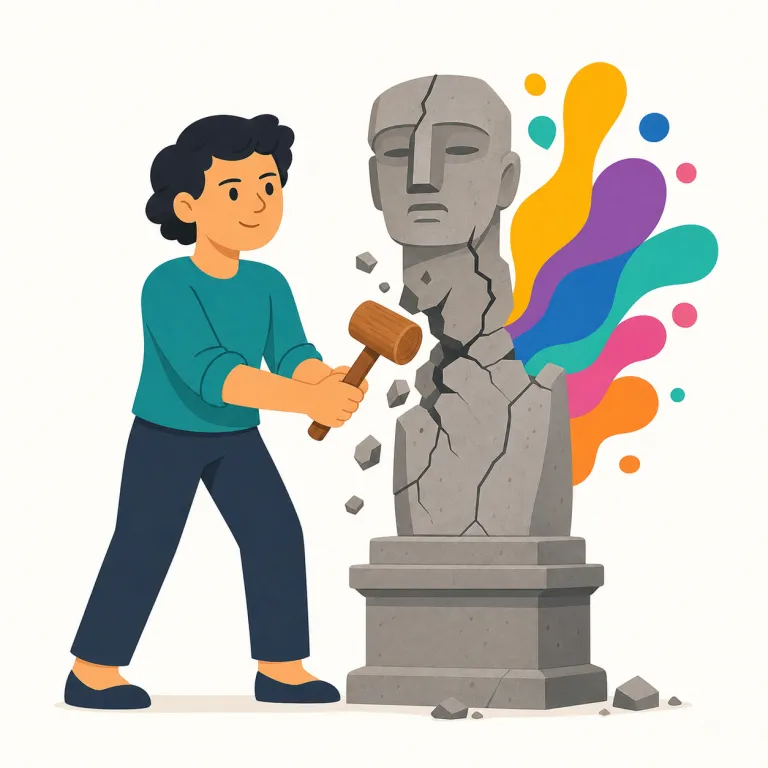
聖像破壊者
noun 名詞宗教上の聖像や偶像を実際に破壊する人を指す。特にビザンツ帝国の聖像破壊運動など、像の崇敬に反対した歴史上の人物について使い、比喩的な「因習に挑む人」と区別される。
偶像破壊者とは、既存の信念や伝統的な価値観に異議を唱え、それらに反発する人のことです。社会的な規範や確立された慣習に挑戦し、変化をもたらそうとする人を指します。
An iconoclast is a person who strongly attacks traditional beliefs, customs, or respected ideas. The word is often used for thinkers, artists, or leaders who challenge what most people accept.
icon を「象徴・崇拝される存在」と知っていると、iconoclast は「その icon に逆らい、壊す側の人」と捉えると覚えやすいです。単なる critic が批判する人なのに対し、iconoclast は“皆が当然と思っている価値観そのもの”に挑む語。an iconoclast thinker / artist のように、伝統破りの思想家・芸術家に付きやすいです。実際に物を壊す vandal ではなく、「既成概念を打ち壊す人」という抽象的な用法を中心に覚えると定着します。
Split it into `icon` and `-clast`. Here `icon` means a holy image, not a phone or computer symbol, and `-clast` carries the idea of breaking. So the word becomes easier to remember as "someone who breaks icons," especially in religious or historical writing.
The artist was an iconoclast, challenging conventional art forms.
その芸術家は、従来の芸術様式に異議を唱える、伝統を打ち破る人だった。
Iconoclasts throughout history have questioned established norms.
歴史上、既成の規範に疑問を投げかけてきた偶像破壊者たちがいる。
The iconoclast's bold ideas sparked important social discussions.
その偶像破壊者の大胆なアイデアは重要な社会的議論に火をつけた。
文脈によって、次の意味でも使われます。
宗教上の聖像や偶像を実際に破壊する人を指す。特にビザンツ帝国の聖像破壊運動など、像の崇敬に反対した歴史上の人物について使い、比喩的な「因習に挑む人」と区別される。
ギリシャ語 eikon(像)と klastes(壊す人)に由来し、文字どおりは「像を壊す人」です。もとは聖像破壊者を指し、そこから既成の価値観を打ち壊す人へ意味が広がりました。関連語は icon、iconography です。
Iconoclast comes from Greek eikon, meaning "image," and klastes, meaning "breaker." It first referred to a person who destroyed religious images. Later, the meaning widened to someone who attacks accepted beliefs or traditions; related words include icon and iconography.
この英単語をクイズで覚えよう