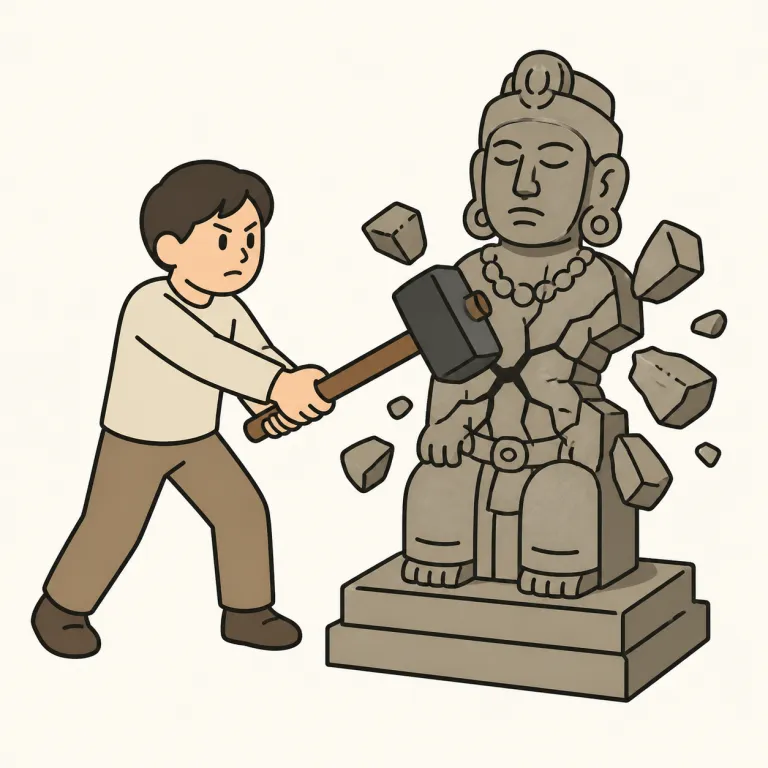
伝統打破、既成価値への挑戦
noun 名詞宗教像の破壊から転じ、社会で神聖視される伝統・権威・通念を公然と否定し、打ち壊そうとする態度や運動をいう。単なる批判より、既成の価値への急進的な挑戦を含む。
宗教的な像や偶像の破壊。または偶像崇拝に対する反対運動であり、歴史的には宗教的改革運動や社会的激変の時期に見られた現象。
Iconoclasm is the act of attacking or rejecting traditional beliefs, customs, or admired symbols. In history, it can mean the destruction of religious images or statues. More generally, it describes strong opposition to accepted ideas.
まず前半の icon を「アイコン・像・象徴」で固定すると覚えやすい語です。そこに「壊す・打ち砕く」感触をもつ後半が続き、全体で「偶像や権威あるシンボルを壊す動き」と捉えると定着します。religious icon を壊す歴史的文脈が中心ですが、比喩的に「伝統や通念への破壊的挑戦」にも広がります。iconoclast は「その人」、iconoclasm は「その思想・運動」という対応で整理すると混同しにくいです。
Hold on to the first part, `icon`, because it means an image, symbol, or sacred figure. Then remember that `iconoclasm` is the movement or idea, while `iconoclast` is the person. It is useful to link the word both to religion and to the broader idea of attacking old traditions.
The movement engaged in iconoclasm by destroying religious statues.
その運動では、宗教的な像を壊す偶像破壊が行われた。
During the Reformation, iconoclasm led to the destruction of many religious images.
宗教改革期には、偶像破壊によって多くの宗教画や聖像が壊された。
The reformers practiced iconoclasm as part of their religious doctrine.
改革者たちは、宗教上の教義の一環として偶像破壊を行った。
文脈によって、次の意味でも使われます。
宗教像の破壊から転じ、社会で神聖視される伝統・権威・通念を公然と否定し、打ち壊そうとする態度や運動をいう。単なる批判より、既成の価値への急進的な挑戦を含む。
ギリシャ語 eikon「像・イメージ」+ klan「壊す」に由来し、ビザンツ期の eikonoklastes「聖像破壊者」を経て英語に入った語です。icon や iconoclast と同根で、「像を打ち壊す」という形から、転じて伝統や権威の破壊まで表すようになりました。
Iconoclasm comes from Greek roots meaning "image" and "to break," and reached English through forms used for Byzantine image-breakers. It originally referred to the destruction of religious images. Later the meaning widened to include attacking accepted traditions, symbols, or authorities; related words are icon and iconoclast.
この英単語をクイズで覚えよう