ジャングル
解説 Definition
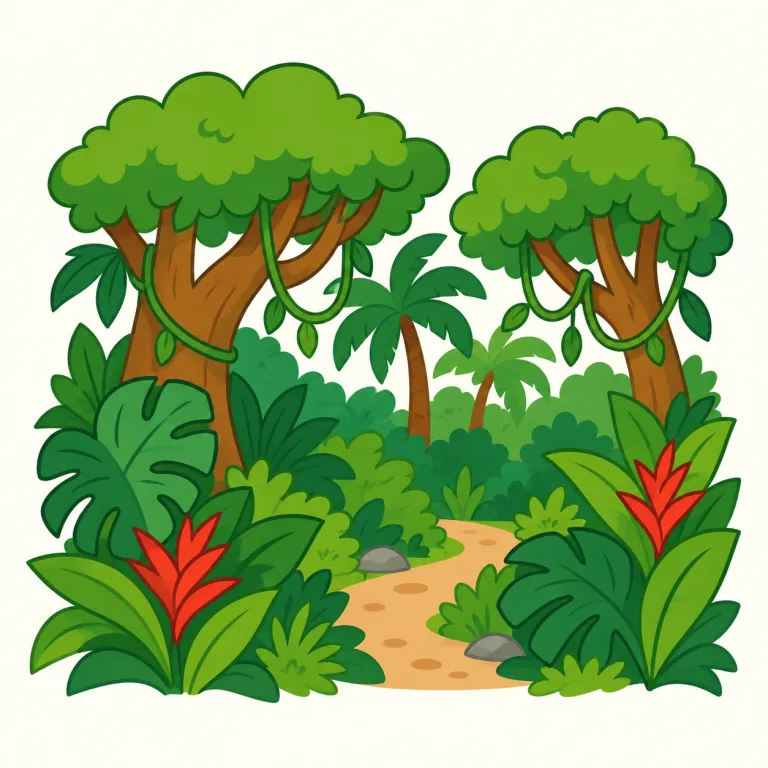
jungle は、木やつる、草などが密に生い茂った熱帯の土地や森「ジャングル」です。植物が絡み合い、移動しにくいほど茂っている様子を表します。
A jungle is an area of tropical land covered with very dense trees, vines, and other vegetation, often making movement difficult. The word usually refers to wild natural growth, though it can also be used figuratively for a crowded or confusing place.
使い方 Usage
使い分け Common distinctions
- rainforest は降水量などによる森林の区分です。jungle は、植物が絡み合って密に茂る様子を強調します。 Rainforest is a forest category based on factors such as rainfall. Jungle emphasizes dense, tangled vegetation.
- a concrete jungle は建物がひしめく都市を表す比喩です。自然の森を指す用法とは区別しましょう。 A concrete jungle figuratively describes a city crowded with buildings. Distinguish this from the natural forest meaning.
覚え方のコツ Memory Tip
日本語の「ジャングル」と結び付け、木やつるが絡み合って歩きにくい森を思い浮かべましょう。dense jungle「密生したジャングル」が覚える手掛かりです。
Connect jungle with the Japanese loanword and picture trees and vines growing so thickly that walking is difficult. Dense jungle reinforces this image.
例文
Many animals live in the jungle.
多くの動物がジャングルに住んでいます。
They walked slowly through the jungle.
彼らはジャングルの中をゆっくり歩きました。
jungle の類義語・関連語
派生語
jungle の語源・成り立ち Etymology
ヒンディー語jangal(荒地・未開地)からポルトガル語経由で英語に入った。元はサンスクリット語jaṅgala(乾燥した荒野)で、本来は密林ではなく荒れ地を指した。英領インド時代に「未開の密林」の意味に変化した。
Jungle entered English from Hindi jangal, probably through Anglo-Indian usage. The Hindi word ultimately comes from Sanskrit jaṅgala, which referred to dry, rough, or sparsely cultivated land rather than a wet tropical forest. During British involvement in India, the borrowed word came to be associated with wild, uncultivated country and then especially with land covered by dense vegetation. Its English meaning therefore shifted considerably from the older sense of dry or open terrain to the familiar sense of tangled tropical growth.
同じレベルの語彙をもっと
外部辞書で調べる
この英単語をクイズで覚えよう