溶解性の
解説 Definition
溶解性の。また、溶解による。細胞を破裂させる。
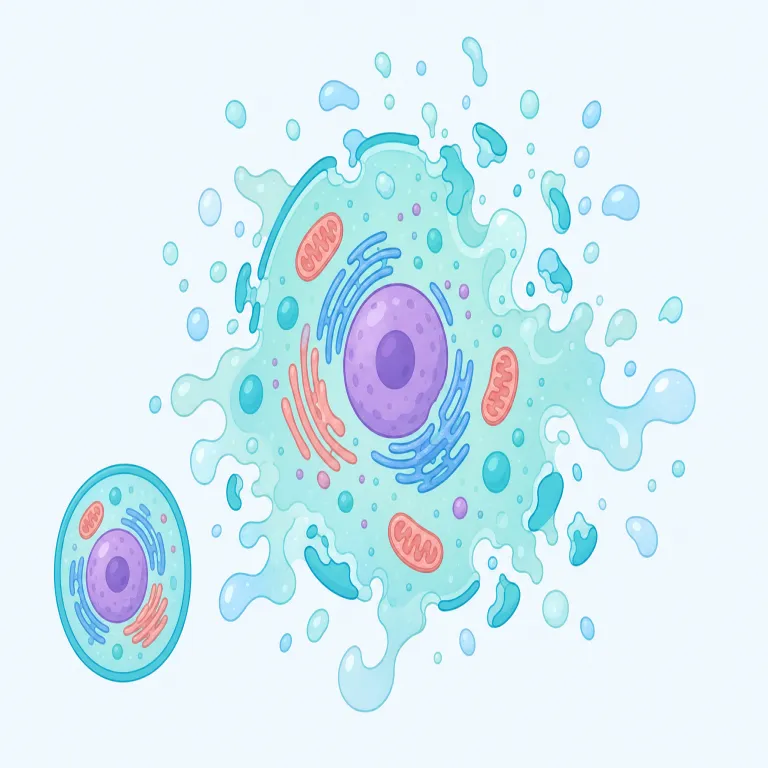
Lytic describes something that breaks down cells, tissues, or other substances. It is mainly used in biology and medicine, especially when talking about destruction or dissolution at the cellular level.
覚え方のコツ Memory Tip
「lytic」は単独で丸暗記するより、`lysis` と対で覚えると定着しやすいです。生物・医学では `lytic enzyme` `lytic infection` のように、細胞や物質を“自分が溶ける”というより“壊す・溶かす側”を表すことが多い語。`soluble` が「溶けやすい」なのに対し、`lytic` は「分解・破裂を起こす」という攻撃的な響きがあります。`hemolytic` `electrolytic` などの仲間とまとめて見ると記憶に残ります。
Connect `lytic` with `lysis`, a science word for breaking down or dissolving. When you see it, expect a formal biology or chemistry context, as in `lytic enzyme` or `lytic reaction`. It is more technical than everyday words like `soluble`.
例文
Lytic reactions break down cellular structures.
細胞溶解反応は細胞構造を分解する。
Lytic enzymes break open cells for laboratory analysis.
細胞溶解酵素は、実験室での分析のために細胞を破壊する。
Lytic viral infections destroy host cells.
細胞溶解性のウイルス感染は宿主細胞を破壊する。
lytic の類義語・関連語
lytic の語源・成り立ち Etymology
ギリシャ語 lysis(溶解・分離)に形容詞接尾辞 -ic が付いた語。語根 ly- は「ほどく・溶かす」を意味し、analysis(分析=解きほぐす)や catalysis(触媒作用)にも共通する。細胞や物質を「溶かす性質」という意味がこの語根から直結する。
Lytic comes from Greek lysis, meaning "loosening," "breaking up," or "dissolving," with the adjective ending -ic. The underlying root carries the idea of untying or releasing. In English, it kept that sense of breaking apart or dissolving, and the same root appears in analysis and catalysis.
同じレベルの語彙をもっと
外部辞書で調べる
この英単語をクイズで覚えよう