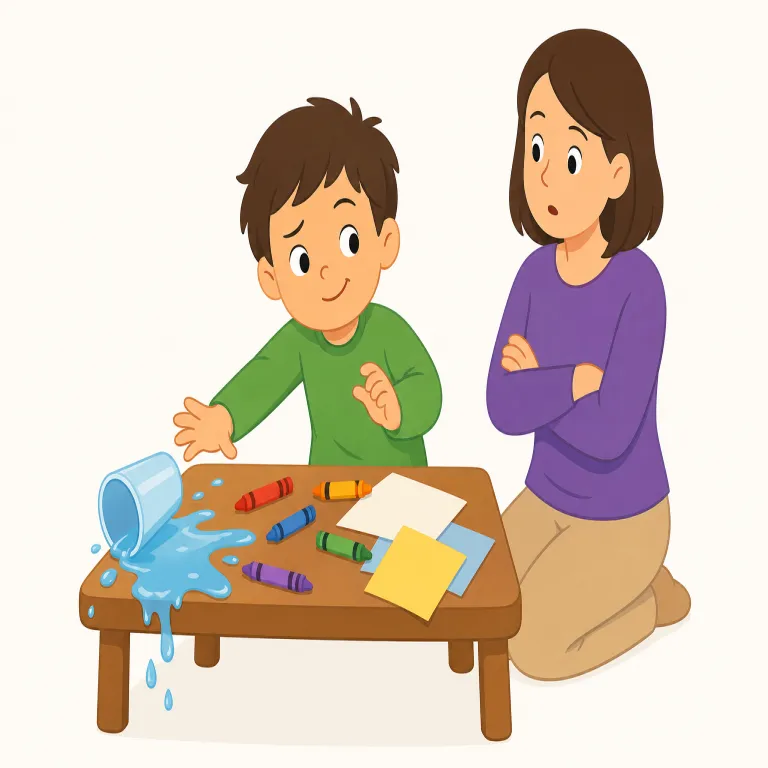
(機械などが)正常に作動しなかった
verb 動詞機械・装置・システムなどが期待どおりに動かず、不具合や異常な動作を示したことを表す。misbehaveの過去形・過去分詞形で、人の行儀ではなく物の予測不能な挙動について使われる。
misbehave の過去形で、授業や食事の場などで礼儀に反する振る舞いをした、言いつけを守らず問題行動をした、という過去の出来事を表す。子どもにも大人にも使え、その場にふさわしくない態度だったことを示す。
Misbehaved means acted badly or did not follow expected rules of behavior. It is often used for children, students, or anyone behaving in an unacceptable way. The word usually refers to social behavior, not serious crime.
mis- は「悪く・間違って」、behave は「ふるまう」。まず behave を知っていれば、misbehave は「ふるまい方をまちがえる」と考えると覚えやすいです。misbehaved はその過去形で、「その場で行儀よくできなかった」。He misbehaved in class. のように授業・食事・公共の場でよく出ます。bad で性格全体を言うより、ある場面での問題行動を指す語だと押さえると定着します。
Split it clearly: `mis-` means badly or wrongly, and `behave` means act. So `misbehaved` is 'acted badly' in a particular situation. It is often used for behavior in class, at meals, or in public, rather than for a person's whole character.
The child misbehaved during the class.
その子どもは授業中に行儀悪くふるまった。
He misbehaved at the formal dinner and was asked to leave.
彼は正式な夕食会で無作法にふるまい、退席を求められた。
When they misbehaved, their privileges were taken away.
彼らが問題行動を起こすと、与えられていた特典を取り上げられた。
文脈によって、次の意味でも使われます。
機械・装置・システムなどが期待どおりに動かず、不具合や異常な動作を示したことを表す。misbehaveの過去形・過去分詞形で、人の行儀ではなく物の予測不能な挙動について使われる。
misbehaved は古英語系 mis-「悪く」+ behave「ふるまう」から成る。behave は be-+ have にさかのぼり「身の処し方を持つ」が元なので、「ふるまいを誤った」から「行儀が悪い」へつながる。関連語は misbehavior, behavior。
Misbehaved is made from mis-, meaning "wrongly" or "badly," and behave. Behave comes from an older sense of "conduct oneself," built from be- and have. So the word originally meant to conduct oneself badly, and it developed into the usual idea of acting badly or not following rules. Related words include behavior and misbehavior.
この英単語をクイズで覚えよう