ムーラン
解説 Definition
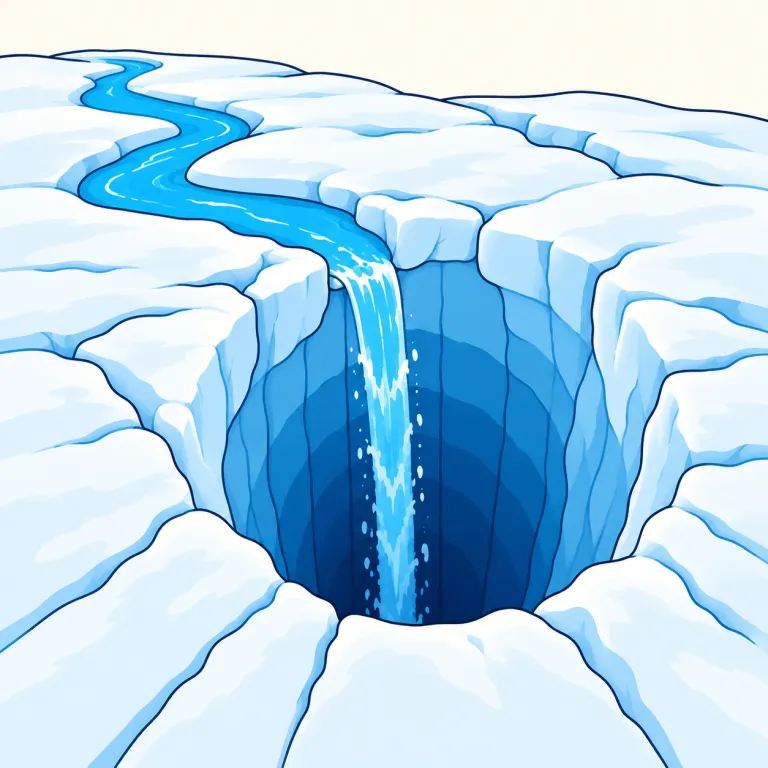
moulin は、氷河表面の融解水が流れ込むことで形成・拡大される、氷河内のほぼ垂直な縦穴です。氷河学で使われる普通名詞で、フランス語の moulin「製粉所」に由来します。
A moulin is a vertical or nearly vertical shaft in a glacier through which surface meltwater descends. The term is used in glaciology and comes from French moulin, meaning “mill.”
覚え方のコツ Memory Tip
moulin は氷河表面の融解水が流れ込む、ほぼ垂直な縦穴「ムーラン」です。語源であるフランス語 moulin「製粉所」と、水が渦を巻きながら穴へ流れ込む様子を結び付けて覚えます。英語では氷河学の普通名詞なので、通常は小文字で書きます。
Picture surface meltwater pouring into a deep, nearly vertical shaft in a glacier. That shaft is a moulin. The term comes from the French word for a mill, which helps evoke water moving into the opening. In this glaciological sense, moulin is a common noun and is normally written with a lowercase initial.
例文
The meltwater stream flowed into a moulin on the glacier.
融解水の流れが氷河上のムーランに流れ込みました。
The moulin extended deep into the ice.
そのムーランは氷の奥深くまで伸びていました。
Moulins carry surface water down through a glacier.
ムーランは氷河表面の水を氷河内部へ運びます。
moulin の類義語・関連語
紛らわしい語
moulin の語源・成り立ち Etymology
フランス語 moulin(風車・水車)から。ラテン語 molīnum(製粉所)が語源で、molere(挽く)に由来する。関連語:mill(製粉所)、molar(臼歯)。氷河学では氷河表面の垂直な穴を指し、水が渦を巻いて氷を削る様子が石臼の回転に似ていることから名付けられた。
As a name, Moulin comes from French moulin, meaning a mill, windmill, or watermill. The French noun developed from Late Latin molinum, “mill,” derived from Latin molere, “to grind.” The same historical root is associated with words referring to grinding, including molar. In English contexts, Moulin may remain unchanged as a surname, place name, or the name of a business or institution, with its original lexical meaning no longer necessarily intended.
同じレベルの語彙をもっと
外部辞書で調べる
この英単語をクイズで覚えよう