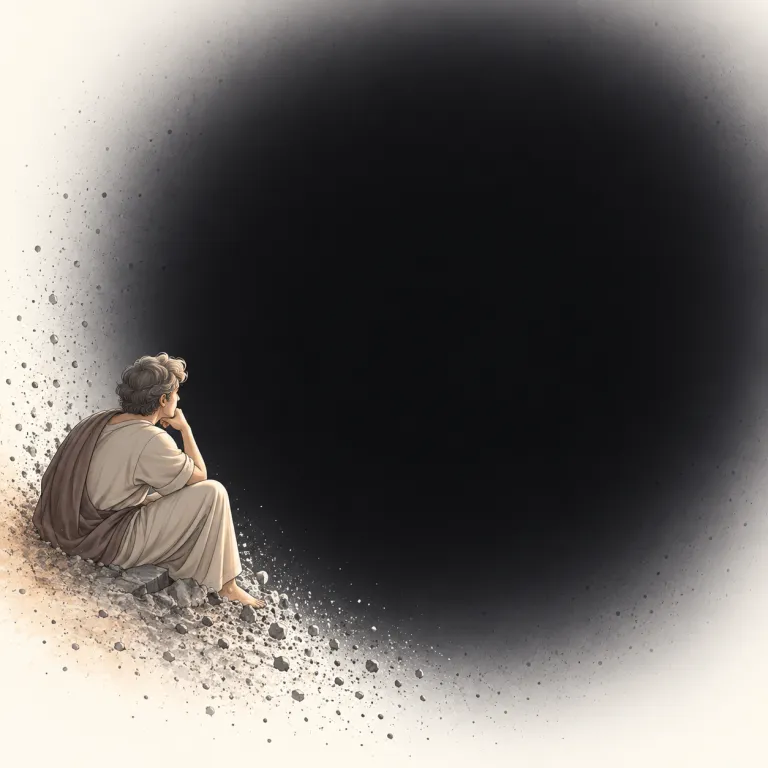
虚無
解説 Definition
何もない状態、無のこと。意味や価値を持たない空虚な状態、または存在しないこと。
Nothingness means the state of having nothing, or a feeling of complete emptiness. It is often used in philosophy, literature, or serious emotional discussions about life and meaning. It is an abstract word that usually describes an idea, not a physical thing.
覚え方のコツ Memory Tip
nothing を知っていれば、nothingness は「何もないことそのもの」とつかむと覚えやすいです。-ness は darkness, kindness などと同じく「状態」にする語尾なので、「nothing の状態」と見れば形がすぐ読めます。empty / emptiness は「空だが入れ物や場所はある」感じですが、nothingness は存在感や意味まで抜け落ちた、もっと抽象的な虚無に近い語です。a sense of nothingness, sink into nothingness のように、哲学・文学・内面描写で出やすい語としてまとめて覚えると定着します。
Build it from `nothing` + `-ness`. The ending `-ness` makes a state, so `nothingness` is the state of nothing. It feels more abstract than `emptiness`, and often appears in phrases like `a sense of nothingness`.
例文
The philosopher contemplated the concept of nothingness.
その哲学者は虚無という概念を深く考察した。
She felt a sense of nothingness after the incident.
その事件の後、彼女は虚無感を感じた。
In nothingness, there is peace.
虚無の中に平和がある。
nothingness の類義語・関連語
nothingness の語源・成り立ち Etymology
nothingness は nothing + -ness「状態」。nothing は古英語の no「ない」+ thing「もの」から成り、something や anything の thing と同根。単にゼロではなく「ものが一つも成立していない状態」だと見ると、「虚無」の感触に近づける。
Nothingness is formed from nothing and the suffix -ness, which makes an abstract state or condition. Nothing comes from Old English no plus thing, literally meaning "not any thing." Over time, the word came to express not just the absence of one thing, but a complete state of emptiness or non-being.
同じレベルの語彙をもっと
外部辞書で調べる
この英単語をクイズで覚えよう