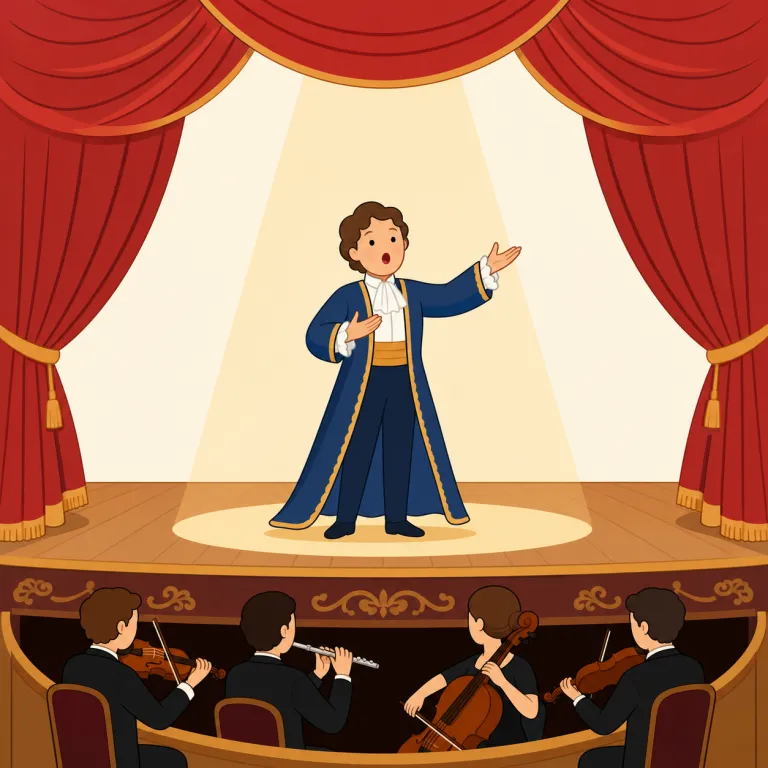
オペラ
解説 Definition
演者たちが歌い、演技をしながら、オーケストラの音楽に合わせてストーリーを表現する舞台作品です。音楽と演劇が融合した高級な芸術形式です。
Opera is a form of theater in which the story is mainly told through singing and music. It usually includes an orchestra, costumes, and dramatic acting. The word can also refer to a specific performance or work in this art form.
覚え方のコツ Memory Tip
opera は日本語の「オペラ」と形が同じなので入りやすいですが、記憶の軸は「歌で物語が進む舞台」です。play はせりふ中心、concert は演奏中心、musical は話す場面も多いのに対し、opera は感情や展開を歌で大きく表す、と対比すると定着します。go to the opera, an opera by Mozart, opera house などの形で覚えると使いやすく、上品で古典寄りの芸術ジャンルという雰囲気も一緒に残せます。
Remember `opera` as a stage story told mainly through singing. Compare it with similar words: a `play` is mostly spoken, a `concert` is mainly music, and an `opera` is dramatic singing. Useful word pairs are `opera house`, `go to the opera`, and `an opera by Mozart`.
例文
This opera is very long.
このオペラはとても長いです。
My mother likes opera songs and stories.
私の母はオペラの歌と物語が好きです。
We will see an opera today.
私たちは今日オペラを見ます。
opera の類義語・関連語
派生語
紛らわしい語
opera の語源・成り立ち Etymology
イタリア語 opera(作品)から。ラテン語 opus(仕事・作品)の複数形に由来する。16世紀末にイタリアで音楽・演劇を融合した「総合作品」として誕生。関連語:opus(作品番号)、operate(操作する、同じ語根で「仕事をする」の意)。
Opera comes from Italian opera, meaning "work" or "piece of work." It goes back to Latin opus, "work," with opera originally being a plural form. In late 16th-century Italy, it became the name for a musical-dramatic work that joined several arts together; related words include opus and operate.
同じレベルの語彙をもっと
外部辞書で調べる
この英単語をクイズで覚えよう