一階席、平土間席
noun 名詞主にアメリカ英語で、劇場の舞台と同じ階にある客席部分、またはその席を指します。the orchestraやorchestra seatsの形で使われ、演奏者が座るorchestra pitとは区別されます。
orchestra はTOEIC 730レベルの英単語で、「オーケストラ」という意味があります。発音記号は /ˈɔːrkɪstrə/ です。
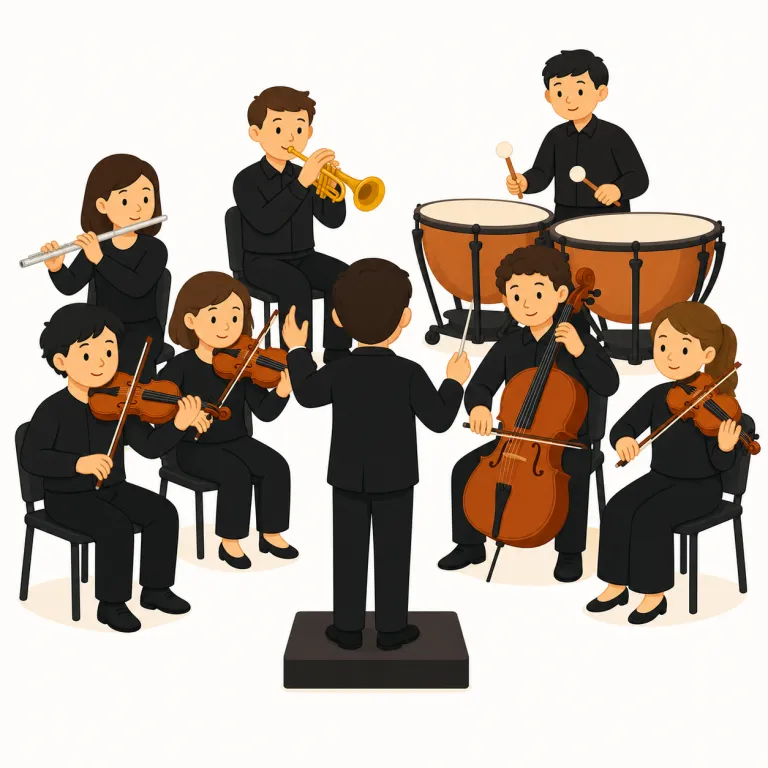
バイオリン、ビオラ、チェロなどの弦楽器と、木管楽器や金管楽器を含む大きな楽器団です。クラシック音楽の演奏に使われます。
An orchestra is a large group of musicians who play different instruments together, usually under the direction of a conductor. It is commonly connected with classical music, concerts, and theaters. The word refers to both the group of players and the music performance itself.
「orchestra」は日本語でも形が近いので、その音を土台にしつつ、意味は“band より大きく、choir ではなく、クラシック中心の演奏集団”として固定すると覚えやすいです。violin, cello, flute, trumpet など多種類の楽器が並び、指揮者が全体をまとめる場面を一緒に思い浮かべると定着します。play in an orchestra, a full orchestra, orchestra conductor のような組み合わせで覚えると実戦的です。orchestral は「オーケストラの」、orchestrate は「全体を編成してうまく進める」で仲間語として整理すると混同しにくいです。
This word looks close to many languages, so connect it to the image of a large classical music group, not just any `band`. Think of many instruments together with a conductor in front. Also link it with related words: `orchestral` for the adjective and `orchestrate` for organizing many parts.
The orchestra plays together.
オーケストラは一緒に演奏します。
This orchestra has many violins.
このオーケストラにはバイオリンがたくさんあります。
The orchestra played music with many instruments.
オーケストラは多くの楽器で音楽を演奏しました。
この語をはじめて出題された 31人 のうち 31人 が正解しました(100%)。
えいたんごクイズの回答から集計した独自データです。1人につき最初に出題されたときの1回だけを数えており、復習や2回目以降の回答、「わからない」と時間切れは含みません。 集計時点は 2026年9月19日 です。
文脈によって、次の意味でも使われます。
主にアメリカ英語で、劇場の舞台と同じ階にある客席部分、またはその席を指します。the orchestraやorchestra seatsの形で使われ、演奏者が座るorchestra pitとは区別されます。
orchestra はギリシャ語 orkhestra に由来し、もとは劇場で『合唱隊が踊る場所』を指しました。さらに動詞 orkheisthai『踊る』にさかのぼり、その場所に集まる演奏者の意味へ移って、今の『管弦楽団』になりました。関連語は orchestrate, orchestral。
"Orchestra" comes from Greek "orkhestra," the part of a theater where the chorus danced. That word is linked to the verb "orkheisthai," meaning "to dance." Later, the name of that performance space shifted to the group of musicians there, and then to the modern meaning; "orchestrate" and "orchestral" are related words.
この英単語をクイズで覚えよう