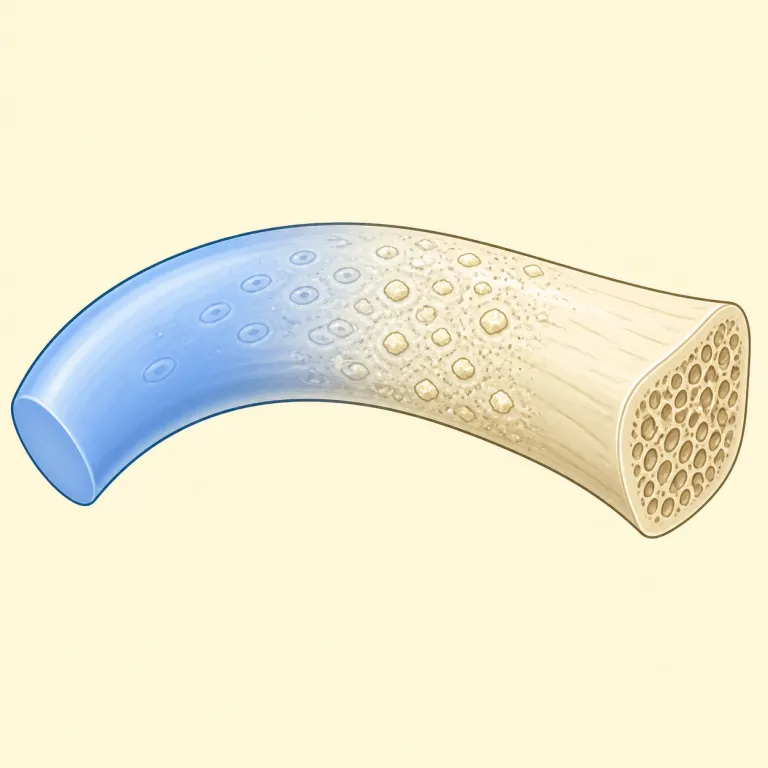
硬直化した、融通の利かない
adjective 形容詞制度・考え方・組織などが長く変化せず、柔軟性や活力を失った状態を比喩的に表す。an ossified systemのように、時代遅れで改革しにくいという批判的な含みで使われる。
軟骨や結合組織が硬化して骨組織に変わった状態。加齢や病気によって進行する生物学的プロセスの結果。柔軟性を失い、硬い骨質へと変化した。
Ossified literally means turned into bone or made hard like bone. It can also describe ideas, systems, or habits that have become too fixed and difficult to change. In this figurative use, it often has a negative meaning.
まず ossify をひとかたまりで覚えるより、語尾の -fy を見て「〜化する」と捉えると整理しやすいです。beautify, simplify と同じ型で、ossified はその結果「骨のように固くなった」状態。意味は literal な「骨化した」だけでなく、ideas, systems, traditions などに付いて「硬直した・柔軟性を失った」にも広がります。frozen は一時的に止まった感じ、rigid は単に硬い性質、ossified は長い時間をかけて固定化した感じが強いです。
Notice the ending `-fy`, like in `simplify` or `beautify`, which often means “make” or “become.” `Ossified` suggests something has become like bone: hard and fixed. That is why it can describe not only real bone, but also old ideas or systems that no longer bend.
The cartilage gradually became ossified as the child grew older.
子どもが成長するにつれて、軟骨は徐々に骨化しました。
In elderly people, some tissues become ossified and lose their flexibility.
高齢者では、一部の組織が骨化して柔軟性を失います。
The connective tissue had become ossified due to calcium deposits over time.
時間がたつにつれてカルシウムが沈着し、その結合組織は骨化していました。
文脈によって、次の意味でも使われます。
制度・考え方・組織などが長く変化せず、柔軟性や活力を失った状態を比喩的に表す。an ossified systemのように、時代遅れで改革しにくいという批判的な含みで使われる。
ラテン語 os(属格 ossis)「骨」+ -fy「〜にする」からできた ossify の過去分詞形です。『骨のように固まる』感覚から、文字通りの「骨化した」だけでなく比喩的な「硬直した」にも広がりました。関連語は osseous, osteology。
Ossified is the past participle of ossify, which comes from Latin os, ossis, meaning "bone," plus the suffix -fy, meaning "make into." It first meant literally "turned into bone" or "made bony." Later it also developed a figurative sense of becoming hard, fixed, or resistant to change. Related words include osseous and osteology.
この英単語をクイズで覚えよう