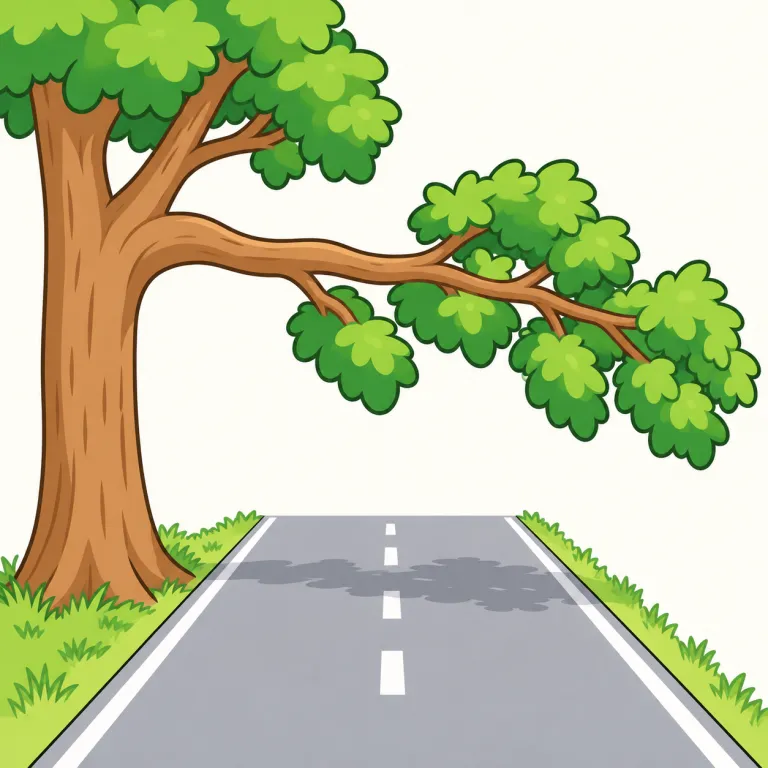
張り出した
解説 Definition
overhanging は、枝・岩・屋根などが下の空間へ外側に張り出した状態を表す形容詞です。動詞 overhang の現在分詞形が、物の位置や形を説明しています。
Overhanging describes something that extends outward above another surface or space, often appearing to hang over it. It is commonly applied to branches, rocks, cliffs, or roofs that project beyond what supports them below.
使い方 Usage
使い分け Common distinctions
- hanging はつるされたり垂れたりしている状態、overhanging は下の空間へ張り出している状態を表します。 Hanging describes something suspended or drooping; overhanging describes something projecting over the space below.
覚え方のコツ Memory Tip
over「上に」+hang「掛かる」から、道路を覆う枝や雨宿りできる岩を思い浮かべます。overhang にそのまま -ing を付ける綴りです。
Picture a branch reaching over a road or a rock providing shelter below. Over plus hang suggests projecting over a space. Add -ing directly to overhang without changing the base spelling.
例文
An overhanging branch blocked part of the road.
張り出した枝が道路の一部をふさいでいました。
The hikers rested under an overhanging rock.
ハイカーたちは張り出した岩の下で休みました。
Rainwater dripped from the overhanging roof after the storm.
嵐の後、張り出した屋根から雨水がしたたり落ちました。
overhanging の類義語・関連語
overhanging の語源・成り立ち Etymology
古英語 ofer(上に)+ hangian(掛かる)から成る複合語over+hangの現在分詞形。岩や屋根などが基部より前方に突き出している状態を表す。関連語:overhang(名詞・動詞)、hanging。「上から覆いかぶさるように垂れ下がる」が原義。
Overhanging is the -ing form of overhang, a compound of over and hang. Both elements have roots in Old English: over continues ofer, while hang is related to Old English forms meaning “to be suspended.” The compound expresses the physical idea of hanging or projecting above and beyond an edge. Adding -ing produces a participle that developed a common adjectival use for roofs, branches, cliffs, and similar objects extending over a lower space.
同じレベルの語彙をもっと
外部辞書で調べる
この英単語をクイズで覚えよう