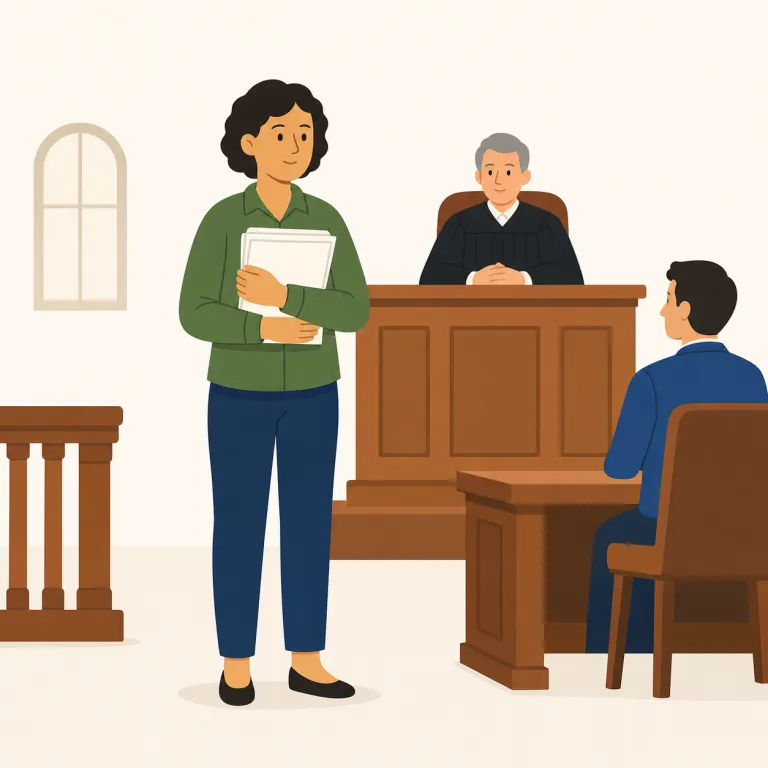
plaintiff
plaintiff は英検準1級レベルの英単語で、「原告」という意味があります。発音記号は /ˈpleɪntɪf/ です。
原告
解説 Definition
民事訴訟で、他人を訴えている人。訴状を提出して裁判所に請求を申し立て、争点を解決しようとする当事者。相手の行為の違法性や損害を証明して賠償などを求める。
A plaintiff is the person or group that starts a legal case against someone in court. This is the side that claims it has been harmed or treated unfairly and asks the court for a decision. The word is mainly used in legal contexts.
覚え方のコツ Memory Tip
plaintiff は defendant(被告)とのセットで覚えるのが最短です。法廷では「訴える側」が plaintiff、「訴えられる側」が defendant。例文でも the plaintiff sued the defendant の形が頻出です。complain や complaint を知っていれば、「不満を申し立てて法的請求まで進めた人」という流れで結びつけやすくなります。単なる被害者ではなく、実際に訴訟を起こして damages などを求める当事者だと押さえると、prosecutor など他の“訴える人”系の語とも混同しにくくなります。
Learn it as a legal pair with `defendant`. The `plaintiff` starts the case, and the `defendant` must answer it. It also helps to connect it with `complaint`, since both words are used when someone brings a legal claim.
例文
The plaintiff said the company broke its promise.
原告は会社が約束を破ったと主張しました。
The plaintiff won the case and received compensation.
原告は裁判に勝ち、補償金を受け取りました。
The judge listened carefully to the plaintiff's arguments.
判事は原告の主張を注意深く聞きました。
plaintiff の類義語・関連語
plaintiff の語源・成り立ち Etymology
古フランス語 plaintif「嘆く・訴える人」が語源で、さらにラテン語 plangere「胸を打って嘆く」にさかのぼります。もともと『不満を訴える人』という語感なので、法廷では『訴えを起こす側』、つまり原告を指すようになりました。関連語は complain, plaintive。
Plaintiff comes from Old French plaintif, meaning a person who complains or laments, and it goes back to Latin plangere, "to beat the breast" or "lament." The original feeling was that of someone expressing grief or complaint. In legal English, that became the person who brings a complaint before a court; related words include complain and plaintive.
同じレベルの英単語をもっと
英検準1級の一覧へ →外部辞書で調べる
この単語を英単語クイズで覚えよう