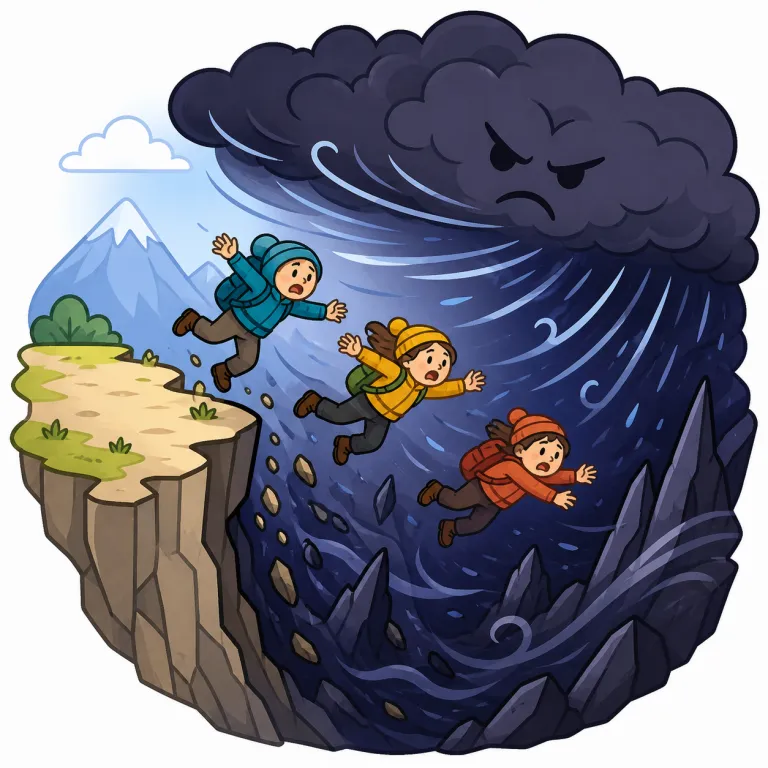
AをBに突っ込む、沈める
verb 動詞物や身体の一部を、液体や穴などの中へ勢いよく突っ込む・沈める意味。plunge A into Bの形で、刃物を物に突き刺したり、手を冷水に入れたりする急激な物理動作を表す。
plunge A into B は、Aを急にBの状態へ追い込む、陥れるという意味の表現。事故や事件、判断などが人や組織を危険、混乱、不況、絶望などの深刻な状況に一気に入れてしまうときによく使う。物理的に突き落とすより、比喩的な用法が中心。
This expression means to suddenly push someone or something into a difficult, serious, or emotional situation. It often suggests a strong and sometimes harmful change. It is common in formal or news-style English.
まず plunge を「水にざぶんと飛び込む・突っ込む」という基本イメージで覚えると、比喩の意味が取りやすいです。plunge A into B は「AをBの中へ一気に落とし込む」感覚で、into があるので“その状態に入り込ませる”と読めます。特に chaos, despair, recession, crisis など深刻な語と結びつきやすく、plunge the country into chaos のようによく使います。put A in B より急で衝撃が強く、throw A into B よりも“深く悪い状況へ”の響きがあります。
Plunge gives a strong image of falling suddenly into deep water. In plunge A into B, A is pushed into a bad state such as chaos, debt, or despair. Remember the pattern with into, because the phrase is about being forced into that condition fast and hard.
The unexpected storm plunged the hikers into danger.
予期せぬ嵐が、登山者たちを危険な状況に陥れた。
The scandal plunged the company into uncertainty.
その不祥事が会社を先行きの見えない状態に陥れた。
The recession plunged many families into debt.
不況で多くの家庭が借金を抱える状況に陥った。
文脈によって、次の意味でも使われます。
物や身体の一部を、液体や穴などの中へ勢いよく突っ込む・沈める意味。plunge A into Bの形で、刃物を物に突き刺したり、手を冷水に入れたりする急激な物理動作を表す。
plungeは古フランス語plongier(潜る・沈める)、さらにラテン語plumbicare(鉛のように沈む)に由来。plumbum(鉛)が語根で、重い鉛が水中に沈む様子が原イメージ。関連語:plumber(配管工=鉛管を扱う人)、plumb(測鉛)。何かを鉛のように深く沈め落とすことから「陥れる」の意味に。
Plunge came into English through Old French plongier, "to dive or sink," and goes back further to Latin words linked to sinking heavily, with a connection to plumbum "lead." The early image was of something dropping down like a heavy weight in water. From that, the verb widened from literal diving or pushing downward to forcing someone or something deeply into a difficult state.
この英語表現をクイズで覚えよう