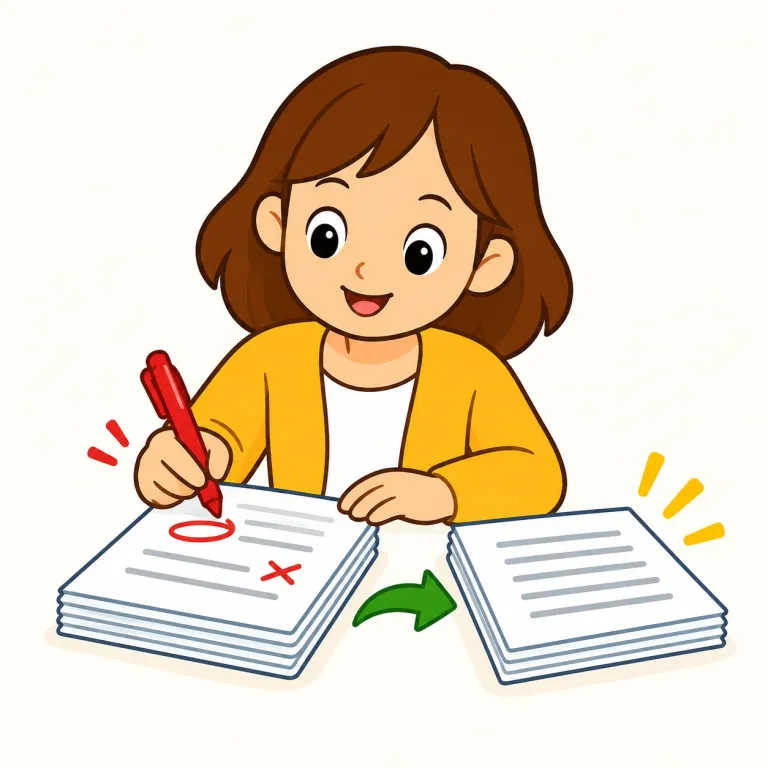
改訂
解説 Definition
revising は revise(改訂する、見直す)の動名詞で、改訂や見直しという意味です。文章、計画、規則などをより正確でよいものに直す作業を指します。
The activity of reviewing and changing a document, plan, rule, or other piece of work to make it more accurate, effective, or suitable. It may involve altering content or organization, not merely correcting surface errors.
覚え方のコツ Memory Tip
原形 revise の語末 e を落として -ing を付けた動名詞です。「もう一度見る」という語形成から、文書・計画・規則を見直して改善する作業につなげます。revising a report や revising instructions が典型で、単なる proofreading より内容や構成まで直す広い作業を表します。
Begin with “revise,” drop its final silent e, and add -ing. The structure of the word suggests looking at something again, which fits the task of examining a report, guide, plan, or instructions and changing it for the better. Learn it in phrases such as “revising a report” and “careful revising.” Unlike proofreading, which mainly catches spelling, grammar, and formatting errors, revising can reshape ideas, wording, structure, or policy. Here “revising” is a gerund naming the improvement process itself.
例文
Revising the report took two hours.
報告書の改訂には2時間かかりました。
She is responsible for revising the school guide.
彼女は学校案内の改訂を担当しています。
Careful revising made the instructions clearer.
丁寧な改訂によって、説明がより分かりやすくなりました。
revising の類義語・関連語
revising の語源・成り立ち Etymology
ラテン語 re-(再び)+ visere(見る)が語源で、「もう一度見直す」が原義。フランス語 reviser を経て英語に入った。関連語: vision(視覚)、visit(訪問)。「再び見る→見直して改める」という意味の流れが改訂の意味を生んだ。
“Revising” is the gerund or present-participle form of “revise,” formed by dropping the final e and adding -ing. “Revise” entered English through French and ultimately comes from Latin revisere, meaning “to look at again” or “return to see.” It combines re-, “again,” with a form related to videre, “to see.” The idea of looking again developed into reviewing and altering written or planned work.
同じレベルの語彙をもっと
外部辞書で調べる
この英単語をクイズで覚えよう