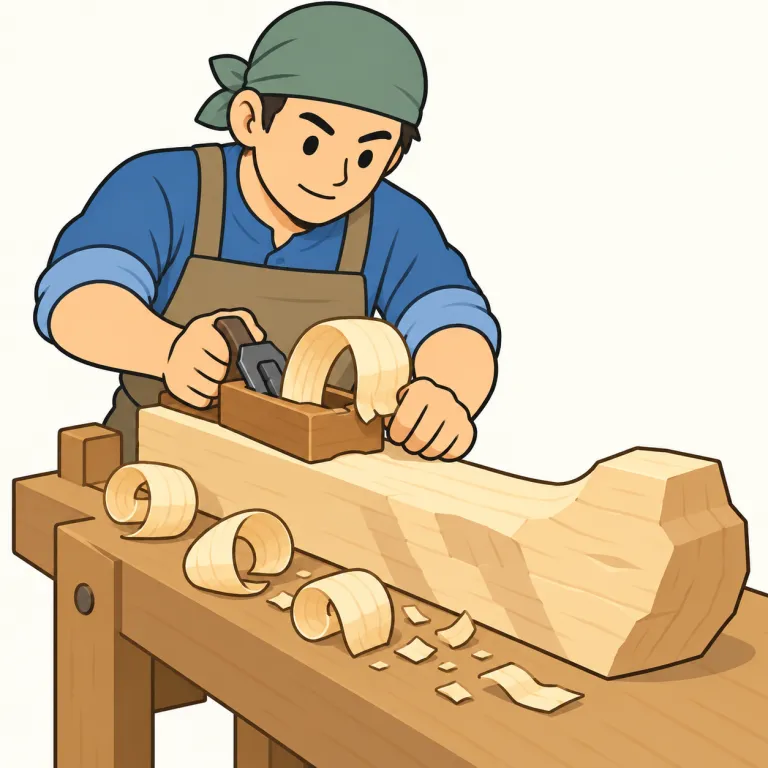
荒削り
解説 Definition
roughing は、細部を仕上げる前に素材を削って大まかな形にする「荒削り作業」です。動詞 rough に -ing を付けた動名詞です。
Roughing is the process of cutting, shaping, or removing material to produce an approximate form before precise finishing work begins. In woodworking, stonework, and metalworking, it establishes the basic outline while leaving finer surfaces, dimensions, and details for later stages.
使い方 Usage
使い分け Common distinctions
- roughing は大まかな形を作る工程、finishing は表面や寸法などを細かく整える仕上げの工程です。 Roughing establishes an approximate shape; finishing refines surfaces, dimensions, and other details.
覚え方のコツ Memory Tip
rough「粗く形を作る」+ -ing と捉え、荒削りから仕上げへ進む工程を思い浮かべましょう。gh は /f/ と読み、roughing の発音は /ˈrʌfɪŋ/ です。
Remember roughing as rough plus -ing. Picture rough material removal followed by precise finishing. The letters gh sound like /f/, so roughing is pronounced /ˈrʌfɪŋ/.
例文
Roughing the stone took most of the morning.
石を荒削りする作業に午前中の大半がかかりました。
After roughing the metal, the worker checked the basic outline.
金属を荒削りしたあと、作業員は大まかな輪郭を確認しました。
roughing の類義語・関連語
類義語
紛らわしい語
roughing の語源・成り立ち Etymology
rough(粗い)+ -ingから成る。roughは古英語rūh(毛むくじゃらの、粗い)に由来し、ゲルマン祖語*rūhwazに遡る。関連語:rugged、ruffian。表面を粗く削る加工や、スポーツでの荒いプレー(反則)を指し、「粗さ」が共通の核心義。
Roughing is formed from rough and the suffix -ing. Rough comes from Old English rūh, meaning “coarse, uneven, or hairy,” and has Germanic relatives. The adjective’s sense of an unfinished or irregular surface produced a verb meaning “make rough” or “shape approximately.” With -ing, the word names that action or process. In machining and crafts, roughing specifically contrasts with finishing, the later stage that produces precise dimensions and smoother surfaces.
同じレベルの語彙をもっと
外部辞書で調べる
この英単語をクイズで覚えよう