意味一覧 (2件)
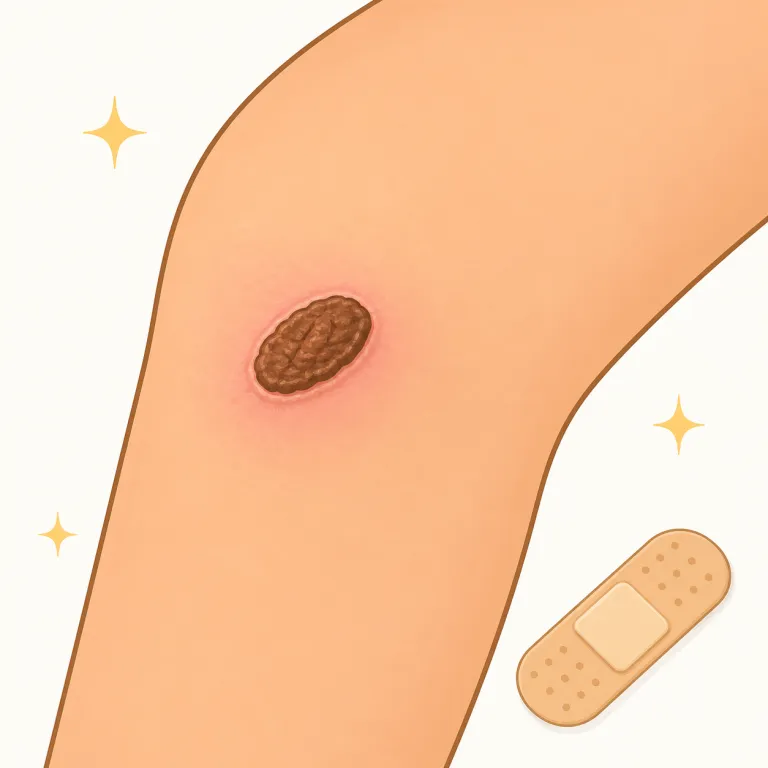
かさぶた
解説 Definition
すり傷や切り傷が治りかけるときに、傷口の上にできるかたい皮のようなものを表します。血や体の液が乾いてでき、傷を守る役目があります。
A hard, dry covering that forms over a cut or wound while it is healing. It helps protect the injured skin underneath.
覚え方のコツ Memory Tip
scab は、すり傷や切り傷の表面で血液などが乾き、治る途中にできる硬い「かさぶた」と覚える。傷そのものでも、治った後に残る scar「傷痕」でもない点が重要。a scab forms on the knee「膝にかさぶたができる」、pick a scab「かさぶたをはがす」、the scab falls off「かさぶたが取れる」を時間順に並べると定着しやすい。転んだ直後の傷を一時的なふたが守り、下の皮膚が治ると自然に外れる場面を思い浮かべれば、scar との違いも明確になる。
Think of a scab as a small hard cap over a wound. It covers the cut while the skin heals.
例文
A scab formed on his knee after he fell.
彼が転んだあと、ひざにかさぶたができました。
Do not pick the scab on your arm.
腕のかさぶたをはがしてはいけません。
The small scab will fall off when the skin heals.
皮ふが治ると、その小さなかさぶたは自然に取れます。
スト破り
(意味 2)
解説 Definition
労働争議やストライキの最中に、組合の行動に加わらず仕事を続けたり、代わりに働いたりする人を指す語。労働者側からは裏切り者として強く非難されることが多く、侮蔑的な響きを持つ。
A scab is a worker who continues to work or takes a job during a strike, against the wishes of the striking workers. The word is strongly negative and is mainly used in labor and union contexts.
覚え方のコツ Memory Tip
まず scab の基本義として「かさぶた」を押さえると覚えやすいです。かさぶたは体の表面にできる不快なもの、そこから労働争議の場では集団の連帯を乱す嫌われ者を強くけなして scab と呼ぶ、と結びつけると定着します。中立語ではなく侮蔑語なので、単なる replacement worker より感情がきつい点が重要です。union, strike, picket line などと一緒に出やすく、cross the picket line する人=scab という場面で覚えると実戦的です。
This word is easiest to remember inside labor disputes. If you see `strike`, `union`, `picket line`, or `cross the picket line`, `scab` fits that scene. It is much harsher and more emotional than the neutral word `strikebreaker`.
例文
The striker called him a scab for continuing to work during the strike.
スト参加者は、ストライキ中も働き続けた彼をスト破りと呼んだ。
Scabs were often treated harshly by union members.
スト破りは組合員から厳しく扱われることが多かった。
He refused to be a scab and joined the workers' protest.
彼はスト破りになることを拒み、労働者の抗議行動に加わった。
scab の類義語・関連語
scab の語源・成り立ち Etymology
scab は古い英語の sceabb に由来し、「かゆみのある皮ふの病気」や「かさぶた」を表していました。さらに古い北欧系やゲルマン語系のことばとも関係があると考えられています。
Scab comes from Old English sceabb, which meant a scab or an itchy skin disease. It is related to older Germanic words for rough or diseased skin.
同じレベルの語彙をもっと
外部辞書で調べる
この英単語をクイズで覚えよう