調味料
解説 Definition
seasoning は season(味付けする)に由来する名詞で、調味料、または味付けそのものを指します。塩、こしょう、ハーブ、スパイスなど、料理に風味を加えるものに使われます。
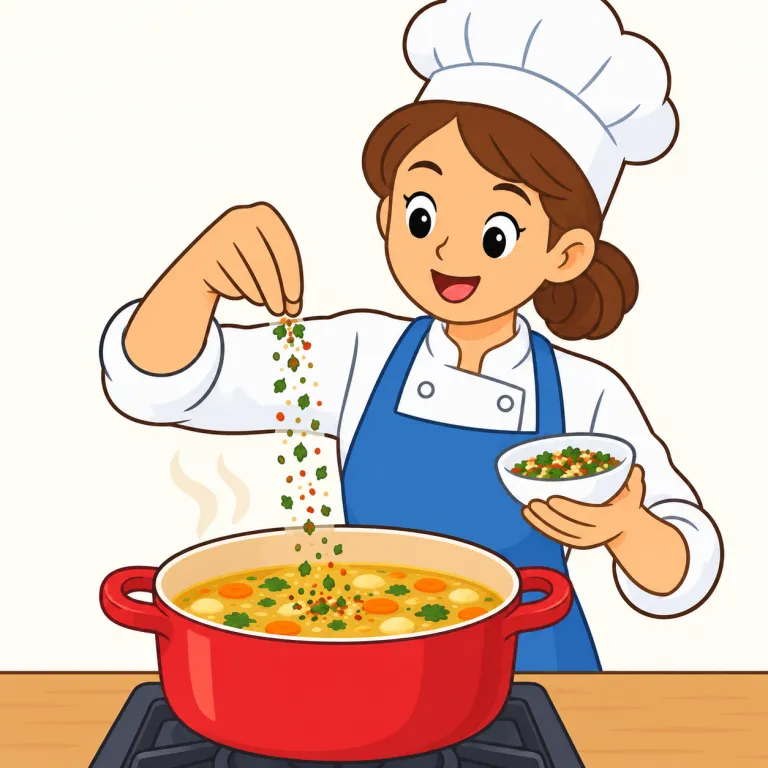
Seasoning is a substance, such as salt, pepper, herbs, or spices, added to food to improve its flavor. The word can also refer collectively to the process or result of flavoring food, rather than to one particular ingredient.
覚え方のコツ Memory Tip
動詞 season「味付けする」に -ing が付いて名詞化し、「味付け」または味を加える「調味料」を表します。add seasoning to soup、salt and pepper as seasonings の形が典型です。season「季節」と同じ綴りですが、料理では時間や香味によって食材を整える意味から発達した用法だと結び付けましょう。
Connect seasoning with the verb season, which in cooking means “to add flavor.” The -ing form became a noun for either the act of flavoring or the ingredients used to do it. Remember common patterns such as add seasoning to the soup and adjust the seasoning. Salt, pepper, herbs, and spices can all serve as seasoning. Unlike spice, seasoning is a broad term and may include salt or mixtures containing several ingredients. The same spelling as season, “a time of year,” reflects the word’s historical development through ideas of proper timing and maturation.
例文
Add a little seasoning to the soup.
スープに少し調味料を加えてください。
This seasoning makes the chicken taste richer.
この調味料を使うと、鶏肉の味に深みが出ます。
She keeps salt, pepper, and other seasoning near the stove.
彼女は塩、こしょう、その他の調味料をコンロの近くに置いています。
seasoning の類義語・関連語
seasoning の語源・成り立ち Etymology
古フランス語 saisonner(味付けする・熟成させる)から。語根はラテン語 satio(種まき)→ season(季節=種まきの時期)で、食物を時間をかけて風味づけすることから「調味料」の意に。関連語:season(季節)、seasonal(季節の)。旬の恵みで味を整える発想が原義。
Seasoning is derived from the verb season plus -ing. Season entered English through Old French saison, ultimately from Latin satio, “sowing” or “planting,” and first referred to the suitable time for an activity. The verb later developed senses involving bringing food to a desired condition through aging or added flavor. Seasoning consequently came to mean both the act of flavoring and a substance used for that purpose.
同じレベルの語彙をもっと
外部辞書で調べる
この英単語をクイズで覚えよう