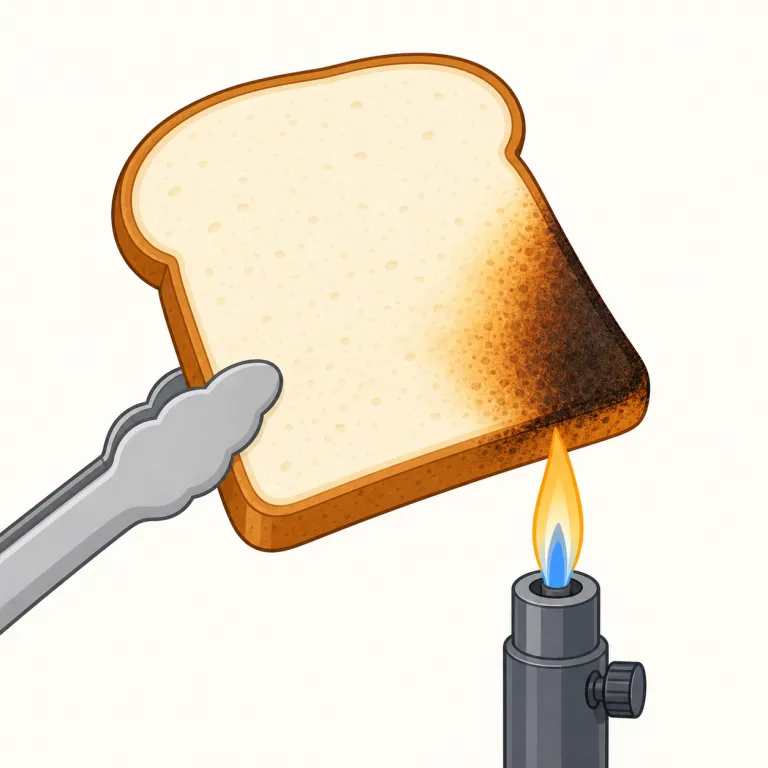
焦がす
解説 Definition
火や熱で表面を軽く焦がすこと。完全に燃やすのではなく表面だけ焼く。
To singe means to burn something slightly on the surface. It usually refers to a quick, light burn that damages the outside without completely burning it. The word is often used for hair, cloth, skin, or food.
覚え方のコツ Memory Tip
burn が「燃える・燃やす」の基本語なら、singe はその弱い・浅い版と覚えると残りやすいです。髪の毛の先、まつ毛、羽毛、パンの表面などが fire / heat でちょっとだけ焼ける場面でよく使い、全体が燃え上がる感じはありません。burn より局所的、scorch より軽め、と並べると区別しやすいです。特に singe your hair / eyebrows, be singed の形をセットで覚えると、「表面をちりっと焦がす」語感が定着します。
Think of `singe` as a small, light version of `burn`. It is often used for hair, eyebrows, feathers, or the surface of something, where only the edge gets lightly burned. Remember the common image `singe your hair`.
例文
Be careful not to singe your eyebrows when lighting the gas stove.
ガスコンロに火をつけるとき、眉毛を焦がさないように気をつけて。
The candle flame singed the edge of the curtain before she quickly pulled it away.
ろうそくの炎がカーテンの端を焦がしたため、彼女は急いでカーテンを炎から遠ざけた。
The cook singed the feathers off the chicken over the open fire.
料理人は鶏の羽を直火で焦がして取り除いた。
singe の類義語・関連語
singe の語源・成り立ち Etymology
singe は古英語 sencgan / sengan「表面を軽く焼く」に由来し、強く燃やし尽くすのでなく、毛先や表面だけを焦がす感覚を表します。だから burn より軽い「ちりっと焦がす」の意味になりました。関連語・同系語に German sengen, Dutch zengen があります。
Singe comes from Old English sencgan or sengan, meaning to burn lightly on the surface. It has Germanic relatives such as German sengen and Dutch zengen. From the beginning, it referred to slight scorching rather than complete burning, which is why it still suggests a quick, shallow burn.
同じレベルの語彙をもっと
外部辞書で調べる
この英単語をクイズで覚えよう