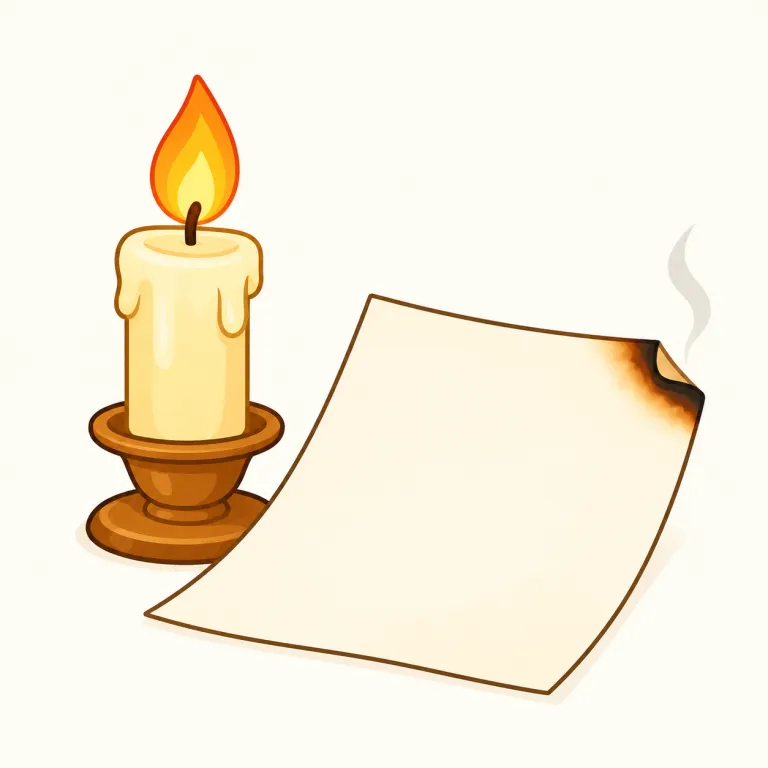
焦げた
解説 Definition
singed は singe(表面を軽く焦がす)の過去形・過去分詞で、形容詞として「焦げた」という意味です。髪、布、紙などが火や熱で少し焼けた状態を表し、sing(歌う)の過去形ではありません。
Singed describes something whose surface or edge has been slightly burned by flame or heat, without being completely destroyed. It is especially used of hair, cloth, paper, and the characteristic smell left by light burning.
覚え方のコツ Memory Tip
singed は singe「表面を軽く焦がす」の過去形・過去分詞で、形容詞なら「焦げた」。語末の黙字 e を落として -ed を付け、発音は /sɪndʒd/ です。sing「歌う」の過去形 sang とは別物。singed hair、singed paper、singed smell のような火や熱の場面で覚えましょう。
Connect singed directly with the base verb singe, meaning “to burn something slightly on the surface.” To form the past tense or past participle, the silent final e is dropped before -ed is added; singed is pronounced /sɪndʒd/, with one syllable. As an adjective, it often modifies hair, cloth, paper, edges, or smell. Keep it separate from sing: the past tense of “sing a song” is sang, not singed. Picture a candle briefly touching the edge of paper—damaged and darkened, but not burned up.
例文
The candle left a singed mark on the edge of the paper.
ろうそくの火で紙の端に焦げ跡が残りました。
He noticed the singed smell as soon as he entered the kitchen.
彼は台所に入るとすぐ焦げたにおいに気づきました。
Her sleeve was slightly singed, but she was not hurt.
彼女の袖は少し焦げていましたが、けがはありませんでした。
singed の類義語・関連語
singed の語源・成り立ち Etymology
古英語「sengan(表面を焼く)」から。ゲルマン祖語に由来し、完全に燃やすのではなく軽く焦がす意。関連語:singe(焦がす)、sear(焼き付ける)。毛先や布の端を軽くあぶる程度の火傷を表す語。
Singed is the past-tense and past-participle form of singe. Singe descends from Old English sengan, “to scorch or burn,” and has long referred to superficial burning rather than complete destruction by fire. In modern spelling, the silent final e of singe is removed before the suffix -ed. The word is historically unrelated to sing, the verb for producing musical sounds with the voice.
同じレベルの語彙をもっと
外部辞書で調べる
この英単語をクイズで覚えよう