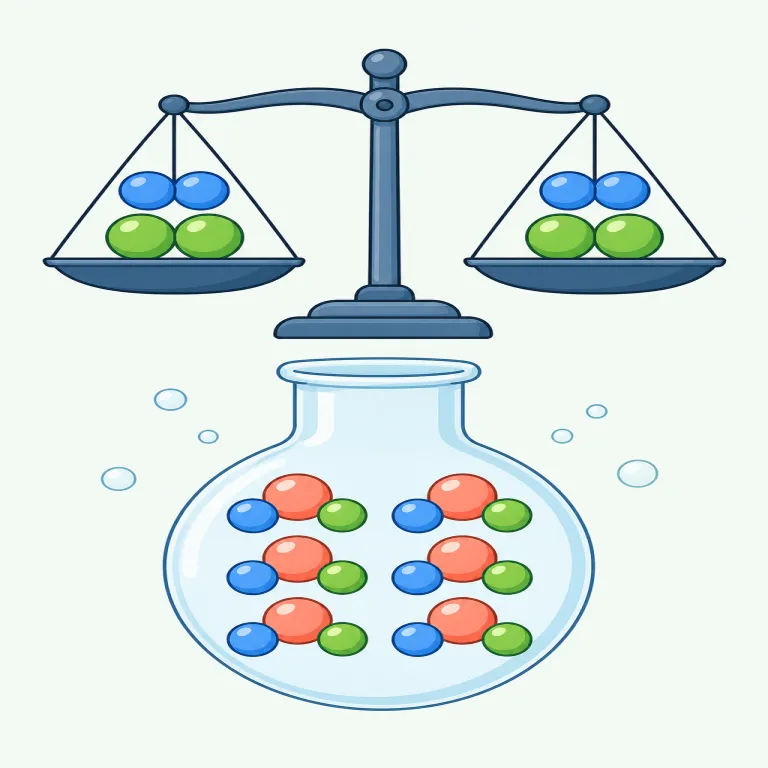
化学量論的
解説 Definition
化学反応において、反応物と生成物の量的関係を表す。モル比に基づいた正確な化学計算に用いられる。
Stoichiometric relates to the exact proportions of substances in a chemical reaction. It is used in chemistry when talking about the balanced amounts of materials that are needed or produced.
覚え方のコツ Memory Tip
まず語尾の -metric を metric(測る・尺度)と結びつけると、「量や比率をきっちり測る語」だと残りやすいです。化学では stoichiometry(化学量論)の形容詞版なので、名詞→形容詞の対応で覚えると安定します。よく出るのは stoichiometric ratio / amount で、「反応式どおりのぴったりのモル比・必要量」という感覚。excess reagent(過剰試薬)と対比すると、「余らせず不足もさせない、計算どおり」のニュアンスが定着します。
Notice the ending `-metric`, which connects to measuring. In chemistry, `stoichiometric` usually appears in phrases like `stoichiometric ratio` or `stoichiometric amount`, so remember it as the exact calculated proportion. It contrasts well with `excess reagent`, where something is more than the needed amount.
例文
The stoichiometric ratio ensures that all reactants are used efficiently in the reaction.
化学量論的な比率により、反応物をすべて効率よく反応させることができる。
Scientists carefully measure stoichiometric amounts to ensure that no reactant is left over.
科学者は反応物が余らないよう、化学量論に基づく量を慎重に測定する。
The stoichiometric ratio shows how much product would form in the reaction.
化学量論的な比率から、反応で生成する物質の量が分かる。
stoichiometric の類義語・関連語
stoichiometric の語源・成り立ち Etymology
stoichiometric はドイツ語 Stöchiometrie 経由で、ギリシャ語 stoikheion「要素」+ metron「測る」に由来します。つまり「要素を量で測る」が原義で、化学量論が反応比を厳密に扱う語だと見えてきます。stoichiometry や metric も同じ根です。
Stoichiometric comes through German Stochiometrie from Greek stoikheion, meaning "element," and metron, meaning "measure." Its original idea was "measuring elements." In modern science, it came to mean the exact measuring of amounts in chemical reactions; stoichiometry and metric share the same roots.
同じレベルの語彙をもっと
外部辞書で調べる
この英単語をクイズで覚えよう