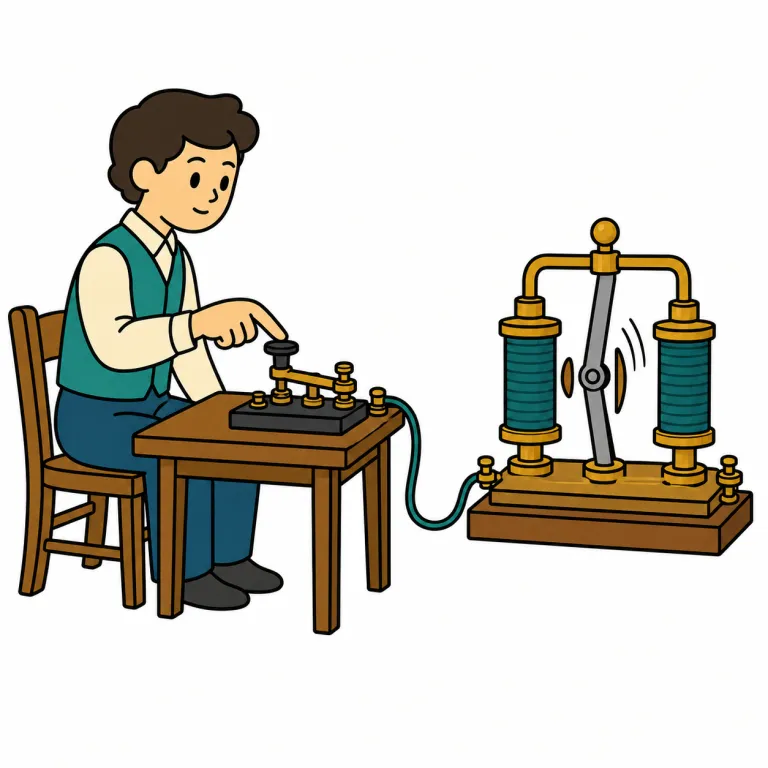
電信
解説 Definition
電気信号を使って遠隔地に文字情報を送る通信技術。モールス信号などを用いた電信。
Telegraphy is the system or practice of sending messages over long distances by telegraph, especially in older communication systems. It usually involves coded signals, such as Morse code. The word is mainly used in historical or technical discussions.
覚え方のコツ Memory Tip
telephone, television の tele- を見たら『離れた所へ』、graph を photograph, graphic の『書く・記録する』と結びつけると、telegraph は『遠くへ文字を送る』装置、その telegraphy はその技術全体だと整理できる。電話のように声を送るのではなく、Morse code で文字信号を打つ通信を思い浮かべると定着しやすい。なお telegram は送られる電報そのもの、telegraphy は方式・技術で区別すると混同しにくい。
Use the parts: `tele-` means far away, and `graph` is about writing or recording. So `telegraphy` is the system or method for sending written signals over distance. It is easier to remember if you connect it with Morse code rather than spoken conversation. Also keep `telegram` separate in your mind: that is the message, while `telegraphy` is the technology.
例文
The invention of telegraphy revolutionized long-distance communication in the 19th century.
電信の発明は19世紀の長距離通信に革命をもたらした。
Samuel Morse played a key role in the development of telegraphy.
サミュエル・モースは電信の発展に重要な役割を果たした。
Wireless telegraphy enabled ships at sea to send distress signals.
無線電信により、海上の船舶が遭難信号を送れるようになった。
telegraphy の類義語・関連語
telegraphy の語源・成り立ち Etymology
telegraphy は telegraph に名詞語尾 -y が付いた語で、語幹はフランス語 télégraphe、さらにギリシャ語の tele-「遠く」+ graphein「書く」にさかのぼります。つまり「遠くへ書いて伝える」が原像で、telephone や graphic も同じ要素を含み、電信の意味に自然につながります。
Telegraphy comes from telegraph with the noun ending -y. Telegraph came through French from Greek tele-, meaning "far," and graphein, meaning "to write." So the original idea was "writing at a distance," which later became the name for sending messages electrically; compare telephone and graphic.
同じレベルの英単語をもっと
外部辞書で調べる
この単語を英単語クイズで覚えよう