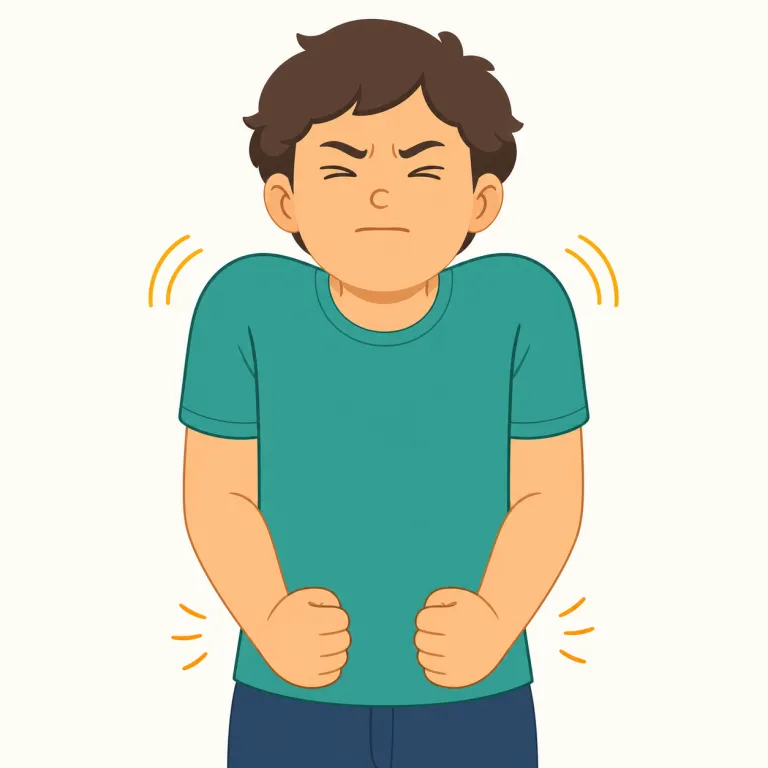
緊張する
解説 Definition
筋肉や体を硬くする、または緊張した状態になることを表します。特にストレスや運動準備に反応して、体が硬くなる動作を指します。
Tensing means becoming tight or making something tight, especially muscles in the body. It often happens because of stress, fear, pain, or physical effort. The word is commonly used for body movement and emotional reaction.
覚え方のコツ Memory Tip
tensing は、まず基本語 tense(緊張した)からつなげて覚えると定着しやすいです。「体や表情が tense な状態へ入っていく動き」と考えると、筋肉がこわばる感じが見えます。be tense は状態、start tensing や muscles are tensing は変化・動作。stress, before a race, hearing a sudden noise など、肩・首・jaw が無意識に固くなる場面と結びつけると覚えやすいです。relax の反対側に置き、stretching のように“伸ばす”のでなく“硬くなる”点も区別すると混同しにくくなります。
Build this from `tense`, the adjective. `Tensing` is the action of becoming tense, especially in your muscles, face, or shoulders. It helps to pair it with real situations like before a race or after hearing a sudden noise.
例文
She was tensing her shoulders in response to the stress.
彼女はストレスに反応して肩に力を入れていました。
The athlete's muscles were tensing in preparation for the race.
選手の筋肉はレースに備えて緊張していました。
Tensing and relaxing muscles is part of the meditation practice.
筋肉を緊張させたり緩めたりすることは、瞑想法の一部です。
tensing の類義語・関連語
対義語
派生語
tensing の語源・成り立ち Etymology
tense はラテン語 tendere「張る」の過去分詞 tensus に由来し、tensing はそこに進行・動名詞の -ing が付いた形。tension や extend と同根で、心身が糸のようにぴんと張る比喩から「緊張する」の意味が生まれる。
Tensing comes from tense with the English ending -ing. Tense goes back to Latin tensus, the past participle of tendere, meaning "to stretch." From the idea of something pulled tight, English developed the sense of physical or emotional strain. Related English words from the same root include tension, tend, extend, and tendon.
同じレベルの語彙をもっと
外部辞書で調べる
この英単語をクイズで覚えよう