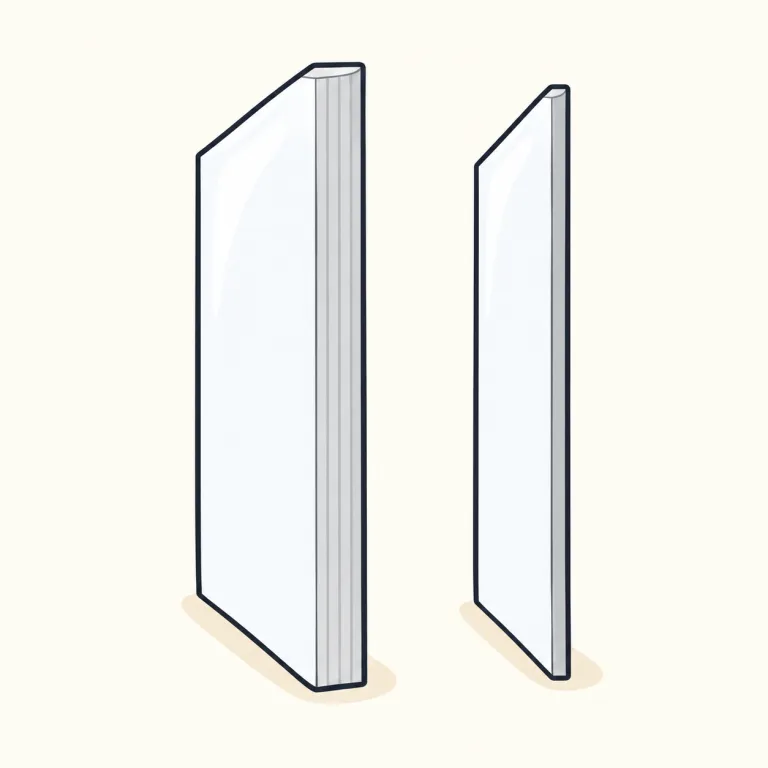
より薄い
解説 Definition
thinner は thin(薄い)の比較級で、より薄いという意味です。紙、布、板、液体などの厚みや濃さを比べるときに使われます。
Thinner is the comparative form of “thin” and describes something that has less thickness than another thing or than it had before. It is commonly used for paper, slices, fabric, objects, and liquids with a less dense consistency.
覚え方のコツ Memory Tip
原形 thin「薄い」に比較級の -er を付けた形です。thin は末尾の子音 n を重ねて thinner となり、発音は「シナー」に近く、th は舌先を歯の間に置きます。thinner than ~「~より薄い」と、紙・布・板・携帯電話など二つの厚みを比べる場面で覚えましょう。
Start with the adjective “thin” and add the comparative ending “-er.” Because “thin” ends in a short vowel followed by one consonant, the final n is doubled: thin becomes thinner. Connect it with the pattern “thinner than” when comparing the thickness of two sheets of paper, slices of bread, phones, or similar objects. In pronunciation, keep the initial “th” sound by placing the tip of your tongue lightly between your teeth.
例文
This paper is thinner than that one.
この紙はあれより薄いです。
I need a thinner slice of bread.
もっと薄いパンの一切れが必要です。
The new phone is thinner than the old model.
新しい携帯電話は古いモデルより薄いです。
thinner の類義語・関連語
thinner の語源・成り立ち Etymology
古英語 þynne(薄い)から派生し、ゲルマン祖語 *þunnuz に遡る。印欧語根 *ten-(引き伸ばす)が原義で、薄く引き延ばされた状態を表す。同根語に tender(柔らかい)や tension(緊張)があり、「伸ばして薄くなる」イメージが共通する。
“Thinner” is formed from “thin” plus the comparative suffix “-er,” with the final n doubled under the usual English spelling rule. “Thin” descends from Old English “þynne” and is related to words in other Germanic languages derived from Proto-Germanic “*þunnuz.” Its deeper history has been associated with the idea of stretching or extending something until it has little thickness.
同じレベルの語彙をもっと
外部辞書で調べる
この英単語をクイズで覚えよう