薬の用量調整
noun 名詞医療で、患者の反応や副作用を確認しながら薬の投与量を段階的に増減することを指します。化学分析の滴定とは異なり、titration of the dose のように治療に適した用量を探る過程を表します。
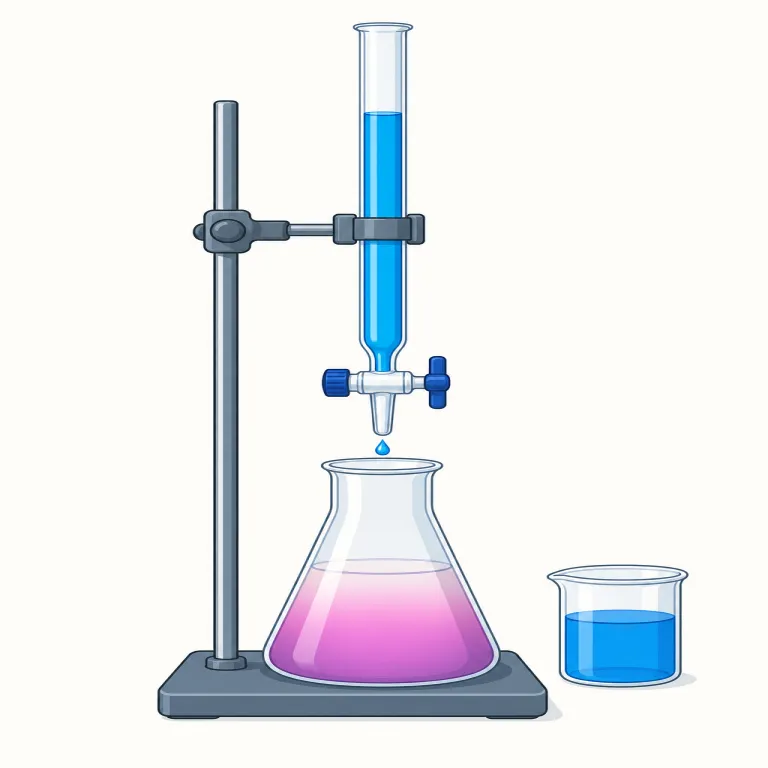
化学分析で、既知の濃度の溶液を少しずつ加えて未知の成分量を測定する方法。
Titration is a chemistry method used to find the amount or concentration of a substance in a liquid. It works by slowly adding another liquid until a reaction reaches a clear endpoint. The term is common in laboratory and science study contexts.
まず動詞 titrate を知っていると覚えやすく、titration はその「操作・過程」を表す -tion 形です。化学では acid-base titration のように、溶液を一気に混ぜるのでなく、少しずつ加えて変化点を見極める場面と結びつけると定着します。point は終点 endpoint、measure concentration と一緒に出やすく、「滴下しながら量を決める分析法」という一枚絵で覚えると、単なる test や reaction と混同しにくくなります。
First remember the verb titrate, then titration becomes the -tion form for the process. In chemistry, think of adding liquid little by little, not all at once, until you reach the endpoint. That slow, careful lab image is the best memory hook.
The student carefully performed the titration to determine the acid concentration.
学生は酸の濃度を測定するために慎重に滴定を行った。
During the titration, the solution turned pink, indicating the endpoint had been reached.
滴定中に溶液がピンク色に変わり、終点に達したことを示した。
Acid-base titration is one of the most fundamental techniques taught in chemistry labs.
酸塩基滴定は、化学実験で教わる最も基本的な技術の一つである。
文脈によって、次の意味でも使われます。
医療で、患者の反応や副作用を確認しながら薬の投与量を段階的に増減することを指します。化学分析の滴定とは異なり、titration of the dose のように治療に適した用量を探る過程を表します。
titration は titrate+-ion で、titrate はフランス語 titrer、さらにラテン語 titulus「表題・ラベル」にさかのぼる。もとは「等級や標準を与える」感覚で、そこから溶液の濃度を見定める操作名になった。関連語は title, titer。
Titration comes from titrate plus the noun ending -ion. Titrate came through French from Latin titulus, meaning a title, label, or inscription, and the idea later shifted toward assigning a standard or measured value. From there, titration became the name for the process of determining the strength or concentration of a solution; title and titer are related words.
この英単語をクイズで覚えよう