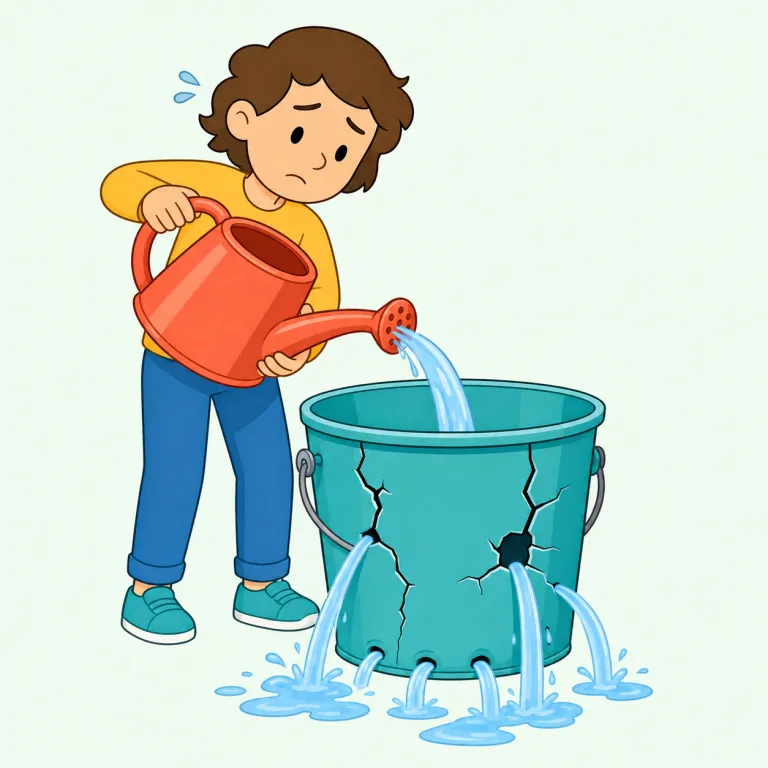
無駄に
解説 Definition
努力が実らず無駄に終わるさま。また、虚栄心を持って振る舞うさま。
Vainly means without success or with no useful result. It is often used when someone tries hard to do something but fails. In some contexts, it can also suggest that the effort was hopeless from the beginning.
覚え方のコツ Memory Tip
vainly は vain+-ly。まず vain を vanity(虚栄心)と in vain(むだに)の2本柱で結ぶと記憶に残る。副詞になると「むなしく、むだに」の意味で、tried vainly to ... や searched vainly for ... の形が多い。uselessly が「役に立たないやり方」寄りなのに対し、vainly は「努力したが成果ゼロ」で終わる感じ。「頑張ったのに空振り」の場面を思い浮かべると定着しやすい。なお vain には「うぬぼれた」もあるので、文脈次第で「見栄っ張りに」の意味も出る、とセットで整理すると混同しにくい。
Link it to the fixed phrase `in vain`, which many learners remember as a set expression. Then `vainly` is the adverb form with the same feeling: you tried, but nothing came from it. It often appears in patterns like `tried vainly to ...` or `searched vainly for ...`. Think of effort that ends in zero results.
例文
He vainly tried to fix the broken engine with nothing but a screwdriver.
彼はドライバー1本で壊れたエンジンを直そうとしたが、無駄だった。
She called out vainly for help, but no one could hear her in the storm.
彼女は嵐の中で必死に助けを求めて叫んだが、誰にも聞こえなかった。
The team vainly attempted to score in the final minutes of the match.
チームは試合の最終盤に得点しようとしたが、無駄に終わった。
vainly の類義語・関連語
vainly の語源・成り立ち Etymology
vainlyはvain「むなしい」に副詞語尾-lyが付いた形で、vainは古フランス語を経てラテン語vanus「空っぽの」に由来します。vanityやin vainも同根で、「中身が空だから成果もない」と考えると「無駄に」の意味が見えます。
Vainly comes from vain plus the adverb ending -ly. Vain entered English through Old French from Latin vanus, meaning "empty" or "without substance." From the idea of emptiness, vain developed senses like pointless or unsuccessful, and vainly came to mean "to no effect." Related words include vanity and the phrase in vain.
同じレベルの語彙をもっと
外部辞書で調べる
この英単語をクイズで覚えよう