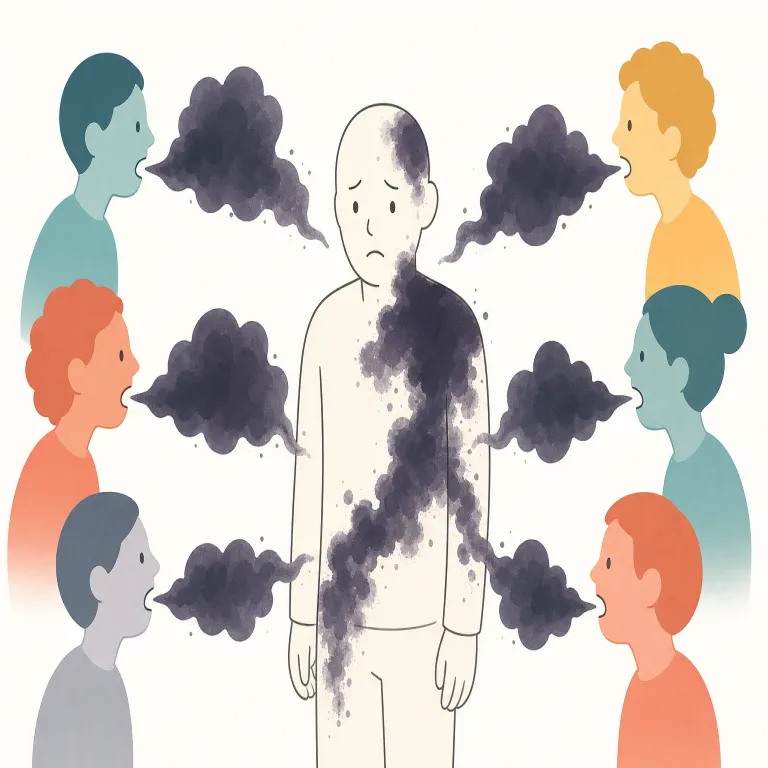
中傷
解説 Definition
中傷、名誉毀損。誰かの評判や名誉を傷つける意図的な悪口や虚偽の発言。
Vilification is very harsh criticism that tries to damage someone's reputation. It often suggests unfair, cruel, or repeated attacks in public or in writing. This is a formal word often used in media, politics, and serious discussion.
覚え方のコツ Memory Tip
まず動詞 vilify を核にすると覚えやすい語です。vile「下劣な・ひどい」を知っていれば、「相手を vile なものとして描く→悪く言う」が vilify、その行為名が -ation の付いた vilification。単なる criticism(批判)より強く、評判を落とす意図や名誉毀損の響きがあります。メディアやSNSでの public vilification、character vilification の形で出やすく、「相手の人格や評判を傷つける中傷」とセットで記憶すると定着します。
Use `vilify` as the base word and connect it to `vile`, meaning very bad or ugly in character. `Vilification` is the act of attacking someone with that kind of language. It is stronger than normal `criticism`, so think of public attacks on a person’s name or image.
例文
The vilification campaign against the candidate was considered unfair by many.
その候補者に対する中傷キャンペーンは多くの人に不公正と考えられた。
She took legal action against the vilification published in that newspaper.
彼女はその新聞に掲載された中傷に対して法的措置を講じた。
The artist suffered from constant vilification due to his controversial work.
その芸術家は、物議を醸した作品が原因で絶えず中傷を受け、苦しんだ。
vilification の類義語・関連語
vilification の語源・成り立ち Etymology
vilification はラテン語 vilis「安っぽい・卑しい」+ facere「作る」由来の vilify に、名詞化の -ation が付いた語です。相手の価値を“低くしてしまう”ことから「中傷」の意味になり、related: vile, vilify。
Vilification comes from vilify plus the noun ending -ation. Vilify comes from Latin vilis, meaning cheap or low, combined with a verb meaning "to make." The sense developed from making someone seem low or worthless, and it is related to vile and vilify.
同じレベルの語彙をもっと
外部辞書で調べる
この英単語をクイズで覚えよう