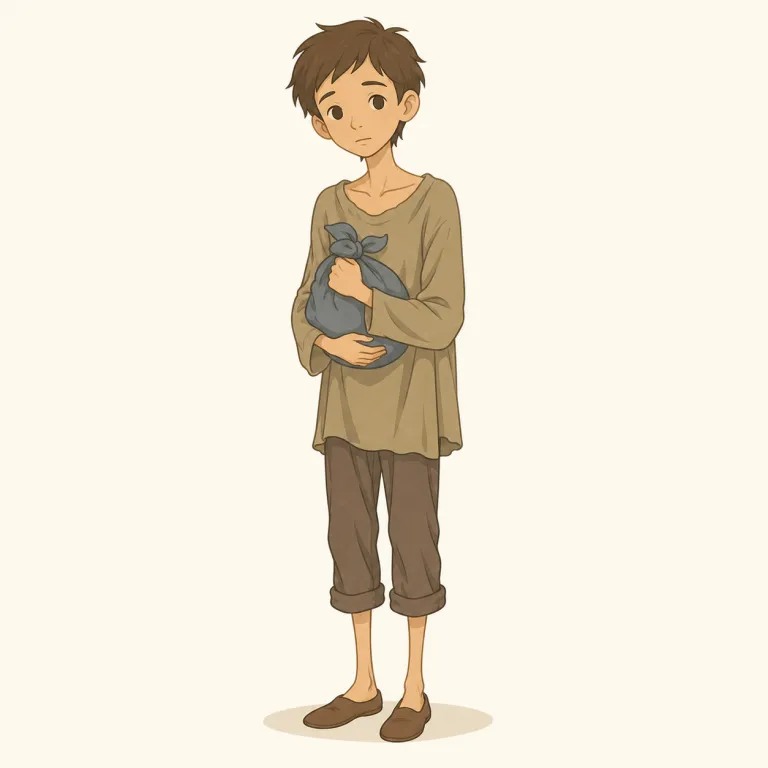
浮浪児、家なき子
解説 Definition
家がなく保護者も乏しい、みすぼらしい子どもを指す語で、文学的な響きをもつ。転じて、やせて弱々しく、放っておかれたように見える人を表すこともあるが、基本的には身寄りのない子どものイメージが中心である。
A waif is a thin, weak-looking person, especially a child, who seems to have no home or proper care. The word often suggests sadness, poverty, or being alone. It is an old-fashioned word and is more common in literature than in everyday speech.
覚え方のコツ Memory Tip
waif は orphan より文学的で、単に「親のない子」という事実よりも、street child や stray のように、保護されず町をさまよう、みすぼらしく弱々しい姿まで含んで思い出すと残りやすい語です。ニュース語というより小説で出やすく、「かわいそうで放っておけない子」の情景で固定するとよいです。人に広げると「やせてはかなげ」の含み。waifish, waiflike も同じ線で覚えられます。
`Waif` is not just any child; it has a literary, emotional feel. Picture a thin, lonely child wandering city streets, like a human version of a `stray`. That image helps separate it from the more neutral word `orphan`.
例文
The novel tells the story of a young waif who wanders the streets of London.
その小説は、ロンドンの街をさまよう若い浮浪児の物語を描いている。
She looked like a waif, thin and frail, standing alone in the rain.
雨の中に一人で立つ彼女は、痩せて弱々しく、まるで身寄りのない子のように見えた。
The charity provides shelter and food for waifs who have nowhere else to go.
その慈善団体は、行き場のない浮浪児たちに住まいと食事を提供している。
waif の類義語・関連語
紛らわしい語
waif の語源・成り立ち Etymology
waif は古フランス語 waif「持ち主のないもの・さまよい物」に由来し、接頭辞より語全体で「捨てられ漂うもの」を表します。そこから身寄りなくさまよう子や浮浪者の意味が生まれ、waiflike や waifish にも同じ捨てられた印象が残ります。
Waif comes from Old French waif, meaning something ownerless or abandoned. It first referred to lost or unclaimed property, especially things found wandering or cast aside. Later, the idea of being abandoned shifted to a person, especially a homeless or parentless child. Words like waifish keep that sense of thinness and neglect.
同じレベルの語彙をもっと
外部辞書で調べる
この英単語をクイズで覚えよう