wring
wring は英検1級レベルの英単語で、「絞る」という意味があります。発音記号は /rɪŋ/ です。
絞る
解説 Definition
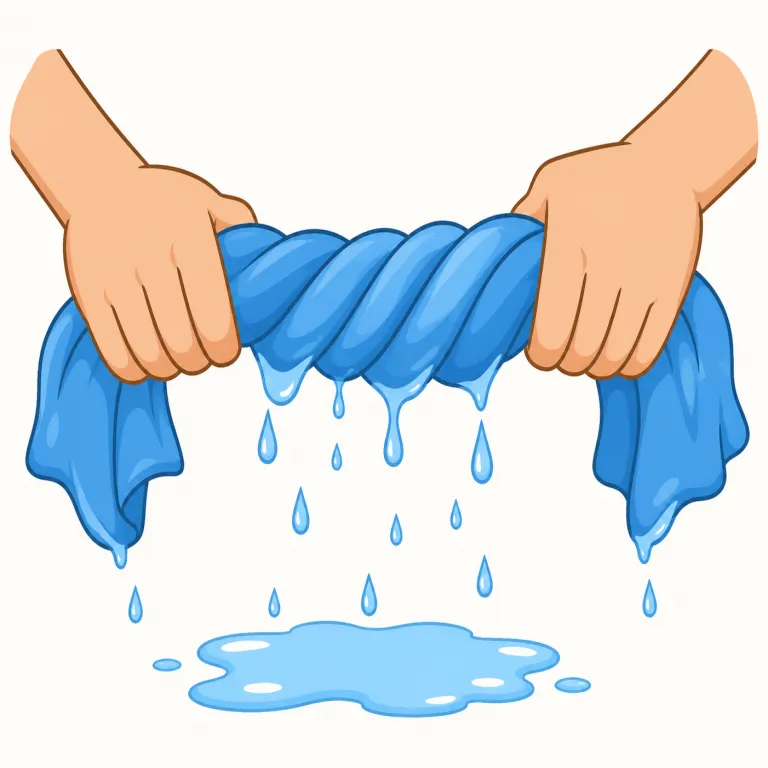
水分や液体をしぼり出す、または強く絞って取り除く動作です。また、何かから何かを無理やり絞り出すことを意味します。
To wring means to twist and squeeze something, especially to force water or liquid out of it. It is commonly used for cloth, towels, or similar soft things. The word can also appear in emotional expressions, but the basic idea is strong twisting pressure.
覚え方のコツ Memory Tip
squeeze が単に「押してしぼる」なのに対し、wring は「ねじりながら絞る」が核。ぬれたタオルを wring out する場面をまず固定すると定着しやすい。つづりは wr- でも発音は /r/ で、write・wrong・wrist と同じ無音の w。見た目は ring に近いが意味は無関係。さらに wring money / information out of ... で「圧力をかけて無理に絞り出す」に広がる。基本イメージは常に“twist + squeeze”。
The key image is a wet towel: you twist it and squeeze it to get the water out. That is `wring` more than just `squeeze` alone. Remember the pattern `wring out`, and note that the `w` is silent, like in `write` and `wrong`. The same image extends to `wring information out of someone`, as if forcing something out by pressure.
例文
She wrung out the wet clothes to remove excess water.
彼女は余分な水を取り除くために濡れた衣類を絞った。
Wring out the mop before cleaning the floor.
床を掃除する前にモップを絞ってください。
He wrung the water from his wet shirt.
彼はぬれたシャツから水を絞り出した。
wring の類義語・関連語
wring の語源・成り立ち Etymology
古英語 wringan「ねじる・締めつける」に由来し、さらにゲルマン祖語を経て印欧祖語 *wer-「曲げる・回す」にさかのぼります。接辞より「ねじる」という動きが核で、そこから布の水を絞る意味へ発展。wrinkle や wrench にも似た発想が残っています。
Wring comes from Old English wringan, meaning "to twist" or "to press tightly," from an older Germanic root. The central idea has always been twisting something by force. From that, English developed the common sense of squeezing liquid out by twisting, and related words like wrench and wrinkle show a similar idea of bending or twisting.
同じレベルの語彙をもっと
英検1級の一覧へ →外部辞書で調べる
この英単語をクイズで覚えよう