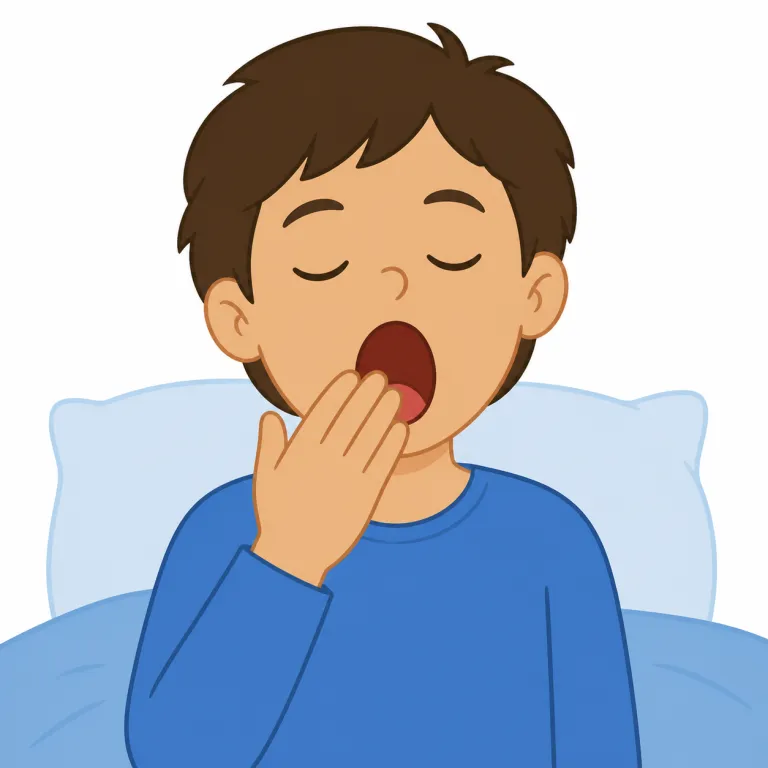
大きく口を開ける、ぽっかり開く
verb 動詞深い穴や割れ目、広い空間などが、口を開けたように大きく広がっていることを表します。a chasm yawns before us のように使うやや文学的な用法で、人が眠気からあくびをする意味とは異なります。
あくびは、口を大きく開けて深く息を吸い込むように見える無意識の動作で、眠気・疲労・退屈などで自然に起こります。体の状態や気分が表に出る反応として使われ、周囲の人にも移ることがあります。
To yawn means to open your mouth wide and take a deep breath because you are tired or bored. It is a natural action that people often do when they need sleep. The word can also be used as a noun for this action.
sleepy や bored の場面で、口が自然に open してしまう一瞬の動作と結びつけると覚えやすい。会話では "I yawned." "He kept yawning during the lecture." のように、眠気や退屈さが表に出る場面でよく使う。stretch と並んで yawn and stretch が定番。長く続く sleep ではなく、その直前に思わず出る反応という位置づけで整理すると残りやすい。つづりは dawn と近いが、意味は全く別。
Be careful with the similar spelling: `yawn` is not `yearn`. To remember it, picture common phrases like `let out a yawn` or `suppress a yawn`. It names that short sleepy reaction, not a long action like sleeping or taking a nap.
She tried to yawn quietly during the boring lecture.
彼女は退屈な講義の間、静かにあくびをしようとしました。
The dog began to yawn, signaling it was tired.
犬はあくびをし始め、疲れていることを示した。
He couldn't help but yawn after the long flight.
彼は長時間のフライトの後、あくびを我慢できませんでした。
この語をはじめて出題された 32人 のうち 30人 が正解しました(94%)。
えいたんごクイズの回答から集計した独自データです。1人につき最初に出題されたときの1回だけを数えており、復習や2回目以降の回答、「わからない」と時間切れは含みません。 集計時点は 2026年9月19日 です。
文脈によって、次の意味でも使われます。
深い穴や割れ目、広い空間などが、口を開けたように大きく広がっていることを表します。a chasm yawns before us のように使うやや文学的な用法で、人が眠気からあくびをする意味とは異なります。
yawn は古英語 ginian「口を大きく開ける」にさかのぼり、さらに印欧祖語の「ぽかんと開く」という感覚につながります。yawning や、同根とされる gap・gape にも同じ『開いてしまう』核があり、眠さで口が勝手に開く動作がそのまま語になっています。
"Yawn" goes back to Old English ginian, meaning "to open the mouth wide." It is linked to a very old Indo-European idea of gaping or opening. That same sense appears in related English words such as "gape" and possibly "gap," all built around the image of something opening wide.
この英単語をクイズで覚えよう