
意味一覧 (2件)
反社会的な
解説 Definition
社会規範や他人の権利を無視する態度や行動のこと。他者との関係を損なわせる傾向。
Antisocial usually means harmful to society or against accepted social rules and behavior. In everyday English, it can also describe someone who avoids other people and does not enjoy social situations, so the exact meaning depends on context.
覚え方のコツ Memory Tip
anti- は「反対」、social は「社会・人とのつながり」。まず social を軸に置き、「社会の中でうまく関わる」の反対側にある語だと捉えると覚えやすいです。ポイントは、単に人づきあいが苦手というより、社会のルールや他人の権利に逆らう響きが強いこと。ニュースでは antisocial behavior の形でよく出て、迷惑行為や犯罪寄りの文脈を連想すると定着します。shy や unsociable よりずっと重く、“社会に害を及ぼす側”の語です。
Split it into `anti-` and `social`. `Social` is about living with other people, so `antisocial` points in the opposite direction. It is much stronger than `shy` or `unsociable`, and you often meet it in `antisocial behavior`.
例文
He was criticized for his antisocial behavior at the party.
彼はパーティーでの反社会的な行動が批判された。
The study revealed antisocial attitudes among some teenagers.
その研究は一部の十代の若者の中に反社会的な態度があることを明らかにした。
Antisocial personality disorder is a serious mental condition.
反社会的人格障害は深刻な精神疾患である。
非社交的な
(意味 2)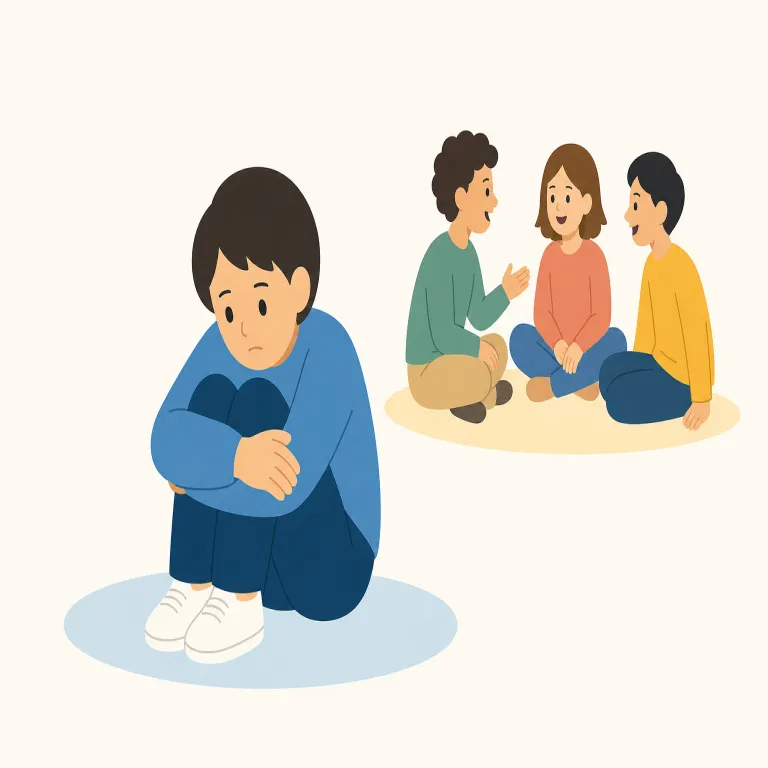
解説 Definition
人と積極的に関わろうとせず、会話や集まりを避けがちな性格や様子を表す。犯罪的・反社会的という意味ではなく、日常会話では「付き合いが悪い」「一人でいるほうが楽だ」と感じる人について使われることが多い。内向的と近いが、社交の場を避ける態度がより前面に出る。
This adjective describes someone who tends to avoid conversations, gatherings, or active involvement with other people. In everyday use, it usually means unsociable or unwilling to socialize, not criminally opposed to society.
覚え方のコツ Memory Tip
anti- は「反対」、social は「人とのつながり」。日常会話では social を軸に置き、「人付き合いの場から距離を取る」の反対向きにある語だと捉えると覚えやすいです。ポイントは、ここでは犯罪的に社会へ敵対するというより、集まりや会話を避ける響きが強いこと。party, large groups, not in the mood to talk の場面を連想すると定着します。ニュースの antisocial behavior は「反社会的」寄りなので、この行では shy や unsociable に近い“非社交的な”語義として分けて覚える。
Break it into anti-, meaning against, and social, relating to connections with other people. Picture someone keeping away from parties or large groups because they would rather be alone.
例文
He isn't rude; he's just antisocial in large groups.
彼は失礼なのではなく、大人数の場では非社交的なだけだ。
I felt antisocial and left the party early.
人と関わる気分ではなかったので、私はパーティーを早めに出た。
She has become more antisocial since moving to a new city.
彼女は新しい町に引っ越してから、以前より人付き合いを避けるようになった。
antisocial の類義語・関連語
antisocial の語源・成り立ち Etymology
antisocial は anti-「反対の」+ social「社会の」から成る。social はラテン語 socialis、さらに socius「仲間」にさかのぼるため、語の中心は「仲間との結びつき」であり、そこに anti- が付いて「社会的つながりや秩序に逆らう」から「反社会的な」となる。関連語は society, associate。
Antisocial is built from anti-, meaning "against," and social. Social comes from Latin socialis, from socius, meaning "companion" or "ally." So the word first carried the idea of being against social ties or social order, which later shaped its modern sense. Related words include society and associate.
同じレベルの語彙をもっと
外部辞書で調べる
この英単語をクイズで覚えよう