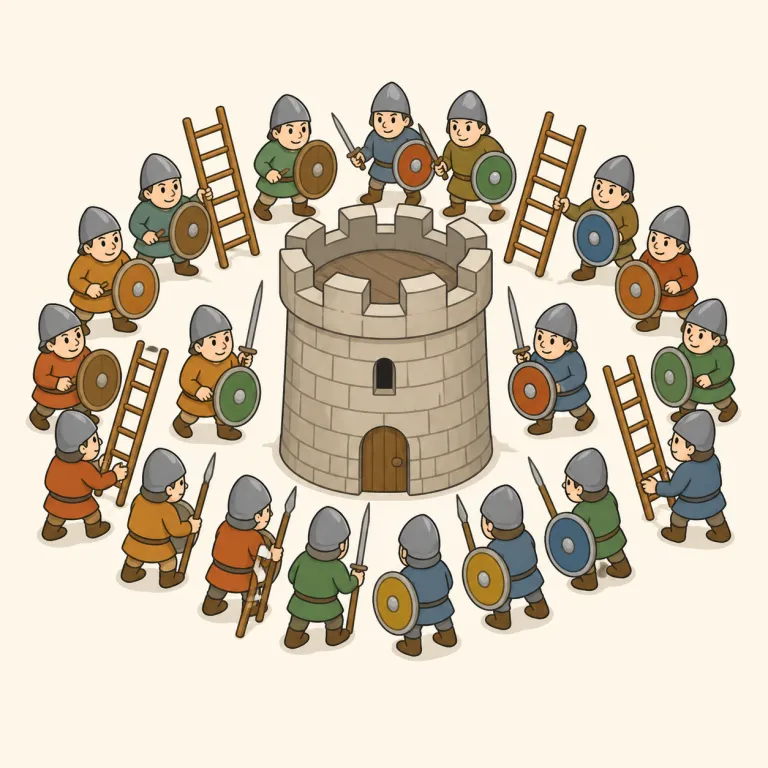
包囲する
解説 Definition
城や都市を軍隊で取り囲み、補給や脱出の道を断って攻撃することです。主に軍事的な包囲を指しますが、人や要求が一か所に押し寄せて取り囲む比喩的な使い方もあります。
Besieging means surrounding a place, especially during a war, in order to attack it or stop people and supplies from entering or leaving. It describes a long and serious military action. In a wider sense, it can also suggest putting strong pressure on someone or something from all sides.
覚え方のコツ Memory Tip
まず中心は siege。ニュースや歴史で「包囲戦」の形で見れば、besiege は「包囲戦をしかける」と取りやすいです。be- は動詞で「全体に・周囲に」という感覚を強めることが多く、城や都市をぐるっと囲む絵で覚えると定着します。besieging はその進行中の形で、「今まさに包囲している」。単なる surround よりも、逃げ道を断って圧力をかける軍事的な重さがある語です。
Start from `siege`, a word often used in history and war. The idea of `be-` can help you picture something all around a place, so imagine a city surrounded on every side. `Besieging` is the ongoing form, so think: they are surrounding it right now.
例文
The army had been besieging the fortress for over three months.
軍は3か月以上にわたってその要塞を包囲していた。
Reporters were besieging the politician's office, demanding answers.
記者たちは政治家の事務所を取り囲み、回答を求めていた。
The enemy forces besieging the city cut off all supply routes.
都市を包囲している敵軍は、すべての補給路を遮断した。
besieging の類義語・関連語
類義語
派生語
besieging の語源・成り立ち Etymology
besieging の元の besiege は中英語由来で、be-「周囲を」+ siege「包囲」に分かれます。siege は古フランス語を経てラテン語 sedere「座る」へさかのぼり、城の周りに居座るのが原像です。siege や session も同根です。
Besieging comes from `besiege`, a Middle English word built from `be-` and `siege.` `Siege` came through Old French from Latin roots linked to `sedere`, meaning "to sit." The original image is of an army sitting around a place, and this developed into the idea of surrounding and attacking it. Related words include `siege` and `session`.
同じレベルの語彙をもっと
外部辞書で調べる
この英単語をクイズで覚えよう