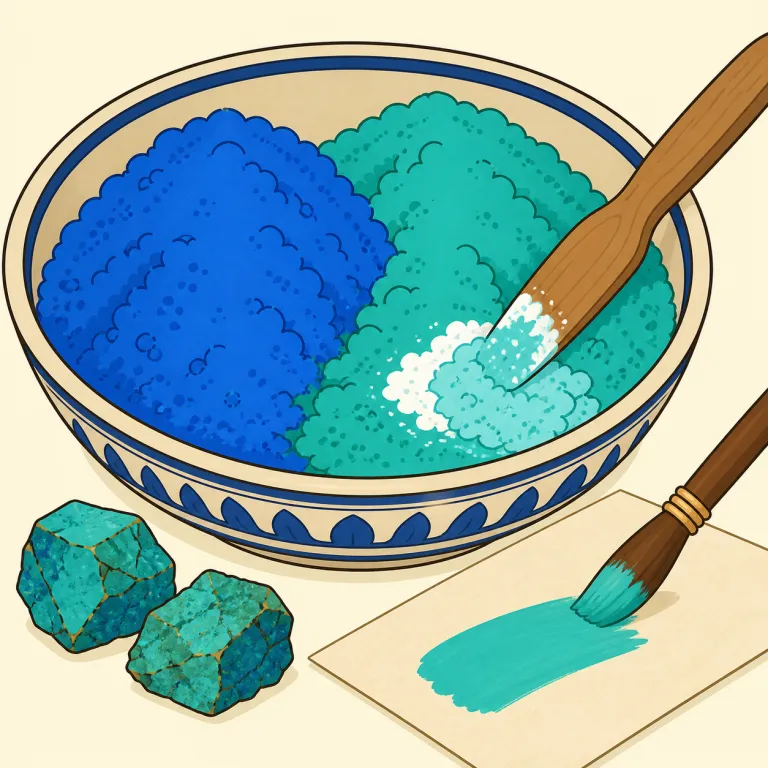
青色または緑色の顔料
解説 Definition
絵画や装飾に用いられる青色または緑色の顔料を指す古い語。天然鉱物由来のものや人工的に作られたものがあり、とくに中世から近世の美術技法や画材の説明で見かける、やや専門的な表現である。
Bice is a blue or green pigment used in painting. It appears mostly in art history or older descriptions of color and materials. This is a rare and technical word in modern everyday English.
覚え方のコツ Memory Tip
一般語として覚えるより、画材・美術史の専門ラベルとして固定すると残りやすい語です。日常の blue / green ではなく、顔料名として現れ、blue bice, green bice の形で出ることがあります。ocher, umber, vermilion のように「色そのもの」より「絵具・顔料」を指す古風な名詞群の一員だと整理するとよいです。beige のような現代の色名と混同せず、「古い絵画の材料説明で出る青緑の顔料名」と場面ごと覚えるのが有効です。
Remember `bice` as an art-material word, not an everyday color word. It belongs with old pigment names like `umber`, `ocher`, and `vermilion`, so it feels more like paint history than normal conversation. If you see `blue bice` or `green bice`, think of labels in an old painter's workshop.
例文
The artist mixed bice with white to create a lighter shade.
その画家は、より淡い色合いを出すためにその顔料に白を混ぜた。
Bice has been used in paintings since the medieval period.
その顔料は中世以来、絵画に用いられてきた。
The old master preferred using natural bice for his works.
その巨匠は作品に天然の青緑系顔料を使うことを好んだ。
bice の類義語・関連語
類義語
紛らわしい語
bice の語源・成り立ち Etymology
古フランス語 bis(暗灰色)に由来し、さらにラテン語の色彩表現に遡る。中世ヨーロッパで青や緑の顔料を指すbise/bisが英語に入った。関連語:bistre(褐色顔料)。画材用語として色名がそのまま絵具名になった例。
Bice came into English from French forms such as bis or bise, names used for a grayish or dark color and later for pigments. Over time, the word shifted from a general color term to the name of blue or green artists' pigments. It is related in history to words like bistre, another pigment name.
同じレベルの語彙をもっと
外部辞書で調べる
この英単語をクイズで覚えよう