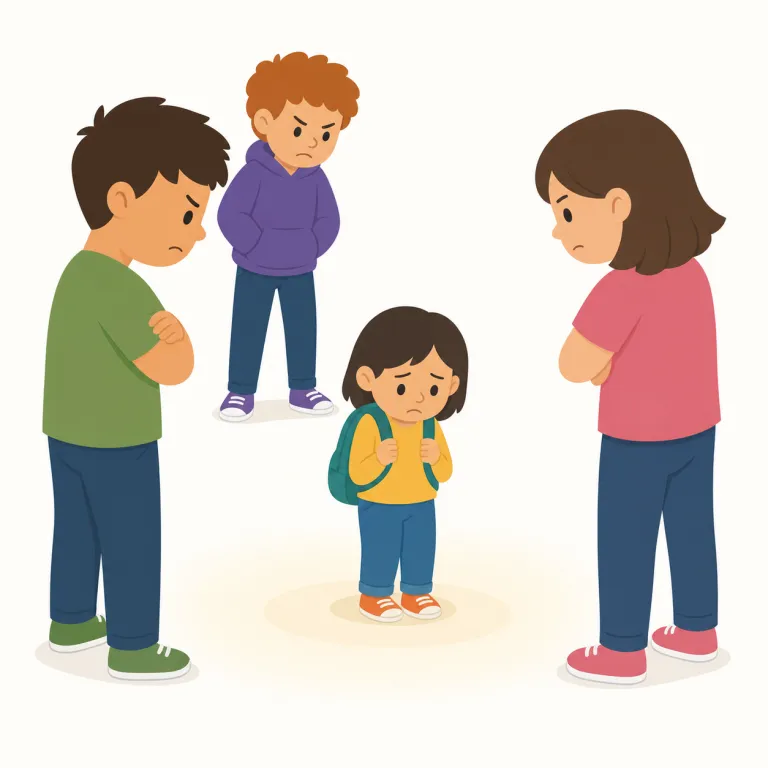
bullying
bullying はTOEFL 80・IELTS 6.5レベルの英単語で、「いじめ」という意味があります。発音記号は /ˈbʊliɪŋ/ です。
いじめ
解説 Definition
学校や職場などで、弱い立場の相手に対して嫌がらせや攻撃をする行為です。いじめる側は個人の場合も集団の場合もあり、身体的または精神的な害をもたらします。
Bullying is behavior in which a person or group repeatedly hurts, scares, or pressures someone weaker or less powerful. It often happens in schools, workplaces, or online. The word usually suggests repeated harmful actions, not just one unkind event.
覚え方のコツ Memory Tip
bullying はまず bully「弱い相手をいじめる・威張って押しつける」を固めると覚えやすい。-ing が付いて「その行為全体」を表す名詞になり、smoking が「喫煙」になるのと同じ感覚。単なる teasing(からかい)より悪質で、力関係の差を利用して繰り返し苦しめる響きが強い。school bullying, workplace bullying, cyberbullying のように場所や形態と結びついて使われやすい。harassment よりも「弱い立場を狙う」イメージが出やすいので、その差も一緒に覚えると混同しにくい。
Start with `bully`, and then see `bullying` as the whole action, just like `smoking` comes from `smoke`. It is stronger than simple `teasing` and often suggests repeated harm and an unfair power difference. Common combinations like `school bullying`, `workplace bullying`, and `cyberbullying` help fix it in memory.
例文
Bullying can make a child feel very sad.
いじめは子どもをとても悲しい気持ちにさせることがある。
Schools have rules to stop bullying.
学校にはいじめをなくすための規則がある。
Bullying often makes people afraid to go to school.
いじめのために学校へ行くのが怖くなる人も多い。
bullying の類義語・関連語
類義語
紛らわしい語
bullying の語源・成り立ち Etymology
bullyingはbully+-ingで、bullyは中期オランダ語boele「恋人・仲間」にさかのぼるとされる。親しい呼び名が後に「威張る乱暴者」へ転じ、そこから相手を苦しめる「いじめ」の意になり、関連語にbully、bullyboyがある。
Bullying is formed from bully plus the suffix -ing. Bully is thought to come from Middle Dutch boele, meaning "lover" or "companion." Its meaning changed greatly over time, from a friendly word to a term for a loud, aggressive person, and then to the act of treating others cruelly. Related words include bully and bullyboy.
同じレベルの語彙をもっと
TOEFL 80の一覧へ →外部辞書で調べる
この英単語をクイズで覚えよう