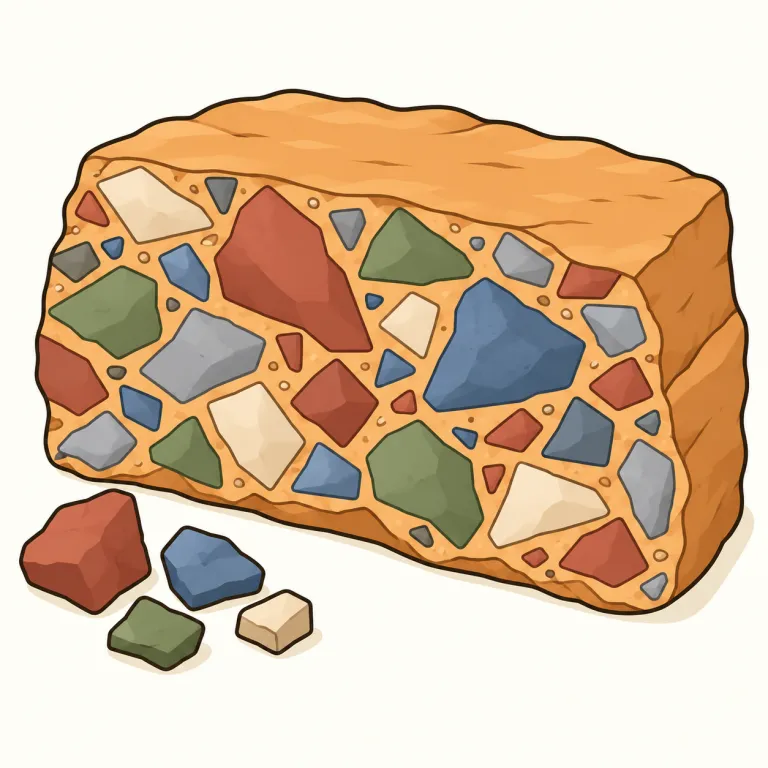
砕屑性
解説 Definition
細かく砕かれた、または砕かれた性質を持つもの。地質学用語で、砂や泥岩のような堆積岩を指します。
Clastic describes rock or sediment that is made of broken pieces of older rocks or minerals. It is mainly used in geology to talk about materials formed from fragments. For example, sand and gravel deposits are clastic materials.
覚え方のコツ Memory Tip
clastic は単独で覚えるより、clastic rock / clastic sediment の形で覚えると定着しやすい語です。地質では「結晶がその場で育った岩」ではなく、いったん砕けた粒・破片が運ばれて積もったものを指す、と場面ごと覚えるのがコツ。-ic は形容詞語尾。plastic と見た目が似ますが、「成形できる」ではなく「破片から成る」のほうだと切り分けると混同しにくいです。
This word is easiest in common pairs like `clastic rock` or `clastic sediment`. Think of broken pieces that came from somewhere else, not something that grew as one solid crystal. It looks a bit like `plastic`, so use that contrast to keep it clear.
例文
Clastic rocks are composed of fragments from older rocks.
砕屑岩は古い岩の破片から構成されている。
Sandstone is a common clastic sedimentary rock.
砂岩は一般的な砕屑堆積岩です。
Geologists analyze clastic materials to understand erosion patterns.
地質学者は侵食パターンを理解するために砕屑物質を分析する。
clastic の類義語・関連語
対義語
紛らわしい語
clastic の語源・成り立ち Etymology
clastic は古代ギリシャ語 klastos「砕かれた」に由来し、語根 kla- は「壊す・砕く」、-ic は「…に関する」を表します。clast や iconoclast も同根で、地質学で「砕屑性」を指すのは、岩石が最初から一体ではなく砕けた破片の集まりだからです。
Clastic comes from Greek klastos, meaning "broken" or "broken into pieces." It is related to a root meaning to break, with -ic added to form an adjective. In geology, the word came to describe rocks made of broken fragments rather than one solid mass. Related words include clast and iconoclast.
同じレベルの語彙をもっと
外部辞書で調べる
この英単語をクイズで覚えよう