要点を抽出する、凝縮する
verb 動詞情報・経験・議論などから最も重要な要素を取り出し、簡潔で明確な形にまとめることをいいます。distil A into B や distil A from B の形で、物理的な蒸留を比喩的に表します。
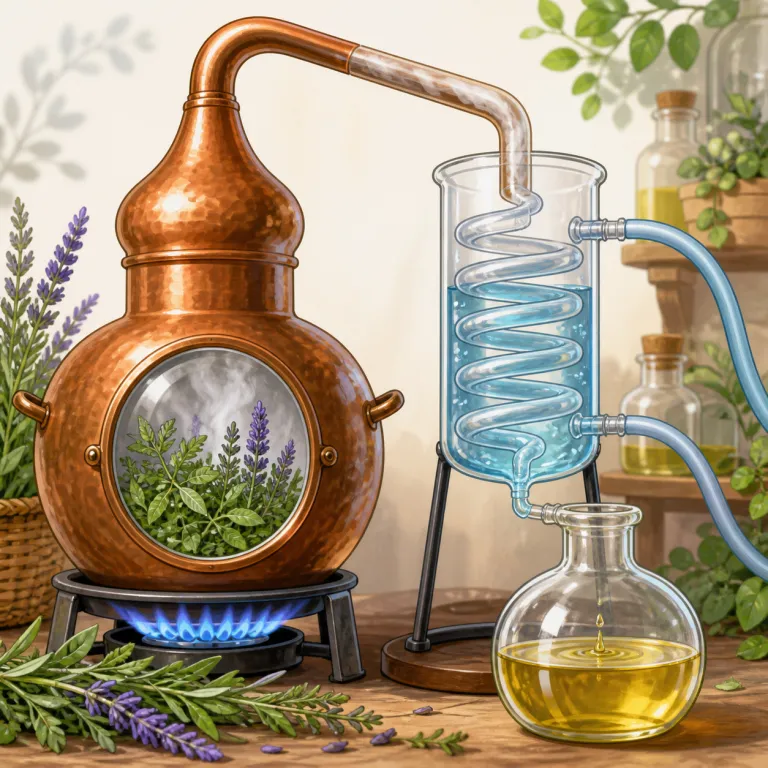
蒸留する。液体を加熱して蒸気にし、冷やして液体に戻す過程。
Distil means to purify a liquid by heating it and collecting the cooled vapor, especially in chemistry or alcohol production. It can also mean to take the most important ideas from a large amount of information and express them in a simpler form.
distil は、ただ liquid を動かすのでなく「混ざったものから純度の高い部分だけを取り出す」動詞。理科の蒸留を核にしつつ、文脈では distil information into a summary のように「情報を要約して本質を抜き出す」にも広がる。extract より、熱して蒸気にし、冷やして精製するプロセス感が強い。綴りは distill とも出るので、その別形も一緒に覚えると見失いにくい。
Think of distil as more than just moving liquid: it is taking out the pure part from a mixture. That image also helps in abstract uses, like distilling a long report into a short summary. You may also see the spelling distill, so learn both forms together.
The process distils the essential oils from plants.
このプロセスは植物から精油を蒸留する。
Distilling alcohol requires proper equipment and knowledge.
アルコールの蒸留には適切な設備と知識が必要である。
Distilled water is purer than tap water.
蒸留水は水道水より純粋である。
文脈によって、次の意味でも使われます。
情報・経験・議論などから最も重要な要素を取り出し、簡潔で明確な形にまとめることをいいます。distil A into B や distil A from B の形で、物理的な蒸留を比喩的に表します。
ラテン語 destillare(滴り落ちる)から。de-(下へ)+ stillare(滴る、stilla=滴)が語根。関連語:instill(注入する)、still(蒸留器)。液体を加熱し蒸気を冷やして一滴一滴「したたらせる」工程が、蒸留という意味の由来。
Distil comes from Latin destillare, meaning "to drip down." It is made from de- "down" and stillare "to drip," from stilla "a drop." The modern sense grew from the image of liquid falling drop by drop during the process; related English words include instill and distillation.
この英単語をクイズで覚えよう