可能性を閉ざす、妨げる
verb 動詞計画・選択肢・議論などについて、実現や検討の余地を前もってなくすことを表す。foreclose the possibility of ... や foreclose debate の形で用い、担保物件を差し押さえる法律上の意味とは異なる。
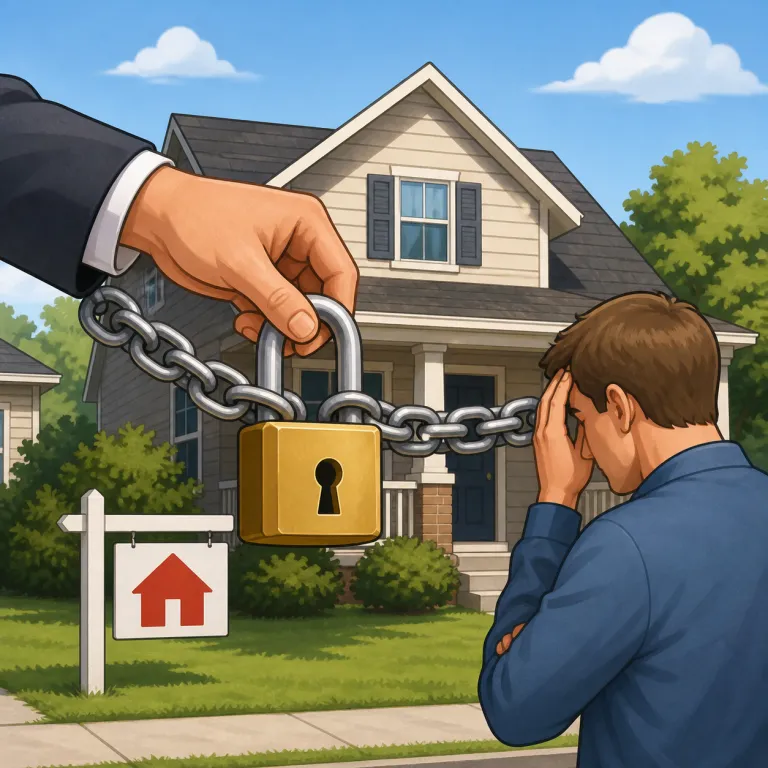
ローン返済が滞った不動産に対して、貸し手が法的に差し押さえし売却する法律行為。住宅担保ローンの分野で一般的な用語であり、債権者が担保物件の所有権を回収する過程である。
Foreclosing is the legal process of taking property, usually a house, because the owner did not pay the loan. It is mainly used in banking and real estate, and the noun form "foreclosure" is more common in everyday use.
foreclosing はまず foreclose を核で覚える。close が「閉じる」なので、「返済できず、その家を持ち続ける道が閉じられる」と考えると金融の意味に寄せやすい。住宅ローン文脈で mortgage, lender, property, loan default と一緒に出やすく、the bank is foreclosing on the house の形で場面ごと覚えると残りやすい。関連する名詞 foreclosure もセットで確認すると定着しやすい。単なる closing(契約完了・店じまい)ではなく、担保不動産を法的に回収する重い手続きだと区別する。
Build it from `foreclose` and notice `close` inside it. A useful memory idea is that when someone cannot keep paying, the path to keeping the house is “closed.” It often appears with words like `mortgage`, `lender`, and `house`, so learn it in that financial scene.
Foreclosing on the property was the bank's last resort after months of missed payments.
何か月も返済が滞った末、銀行に残された最後の手段はその物件の差し押さえでした。
Foreclosing on a mortgage means the lender takes back the property.
住宅ローンの担保物件を差し押さえると、貸し手がその物件を取り戻すことになります。
Foreclosing on so many homes during the housing crisis caused public concern.
住宅危機のさなかに多数の住宅が差し押さえられたことで、世間に不安が広がった。
文脈によって、次の意味でも使われます。
計画・選択肢・議論などについて、実現や検討の余地を前もってなくすことを表す。foreclose the possibility of ... や foreclose debate の形で用い、担保物件を差し押さえる法律上の意味とは異なる。
foreclosing は foreclose の -ing 形が名詞化したもので、fore- は古英語「前もって」、close はラテン語 claudere「閉じる」系。権利の道を先に閉ざすイメージから、抵当流れ・差し押さえの法的意味になった。関連語に enclosure, clause。
Foreclosing comes from foreclose with the noun-forming use of -ing. Fore- comes from Old English and means "before," while close comes through Latin claudere, "to shut." The central idea is "to shut off beforehand," which developed into the legal sense of cutting off someone's claim or right.
この英単語をクイズで覚えよう