付き合う、よく一緒に過ごす
phrasal_verb 句動詞「hang around with 人」の形で、その人とよく一緒に過ごしたり、親しく付き合ったりすることを表します。単にある場所に長居するのではなく、友人関係や普段行動を共にする仲間に焦点を当てる口語的な用法です。
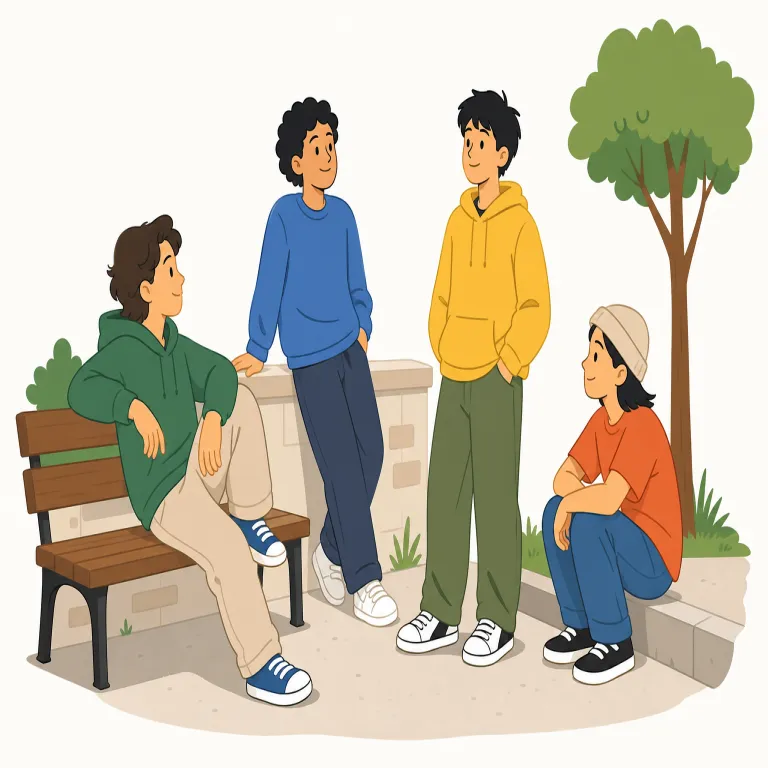
hang around は英検準1級・TOEIC 730・TOEFL 60・IELTS 5.5レベルの英熟語で、「たむろする」という意味があります。発音記号は /hæŋ əˈraʊnd/ です。
目的もなくある場所の近くに長時間居続ける;だらだらとたむろする
This phrasal verb means to stay somewhere for a while without a clear purpose, often in a casual way. It can also mean to spend time with certain people regularly. It is mainly used in informal conversation.
hang を「その場に引っかかったまま動かない」、around を「その辺で」と置くと覚えやすいです。hang around は「近くにずっといる」で、目的地へ進まず、その場や周辺に居残る感じ。just hang around the station, kids hanging around outside などでよく出ます。友達と過ごす hang out と近いですが、hang around の方が「だらだらいる・うろつく」寄り。単なる stay より目的のなさが強く、loiter に近い場面もあります。
Think of `hang` as staying in one place and `around` as nearby. So `hang around` gives the feeling of being in an area without a clear purpose. It is close to `hang out`, but often sounds more like waiting, lingering, or loitering.
Teenagers hung around the arcade until it closed.
ティーンエイジャーたちはゲームセンターの周りで、閉店までたむろしていた。
I can't hang around the office after hours; I have to go home.
終業後にオフィスに長居するわけにはいかない、家に帰らなければ。
Please don't hang around the entrance after the concert.
コンサートの後、入り口付近でだらだらとたむろしないでください。
文脈によって、次の意味でも使われます。
「hang around with 人」の形で、その人とよく一緒に過ごしたり、親しく付き合ったりすることを表します。単にある場所に長居するのではなく、友人関係や普段行動を共にする仲間に焦点を当てる口語的な用法です。
hang around は hang「ぶら下がる・居残る」と around「周囲に」から成る句動詞です。hang は古英語 hangian に由来し、「その場にぶら下がったまま動かない」イメージから、「近くでうろうろする、たむろする」という意味が自然に生まれました。関連語は hangout, hanger。
This phrasal verb is made from hang and around. Hang comes from Old English hangian, and it first suggested staying suspended or remaining in one place. From that idea of not moving away, hang around developed the sense of staying nearby, waiting, or spending time in a place. Related words include hangout.
この英熟語をクイズで覚えよう