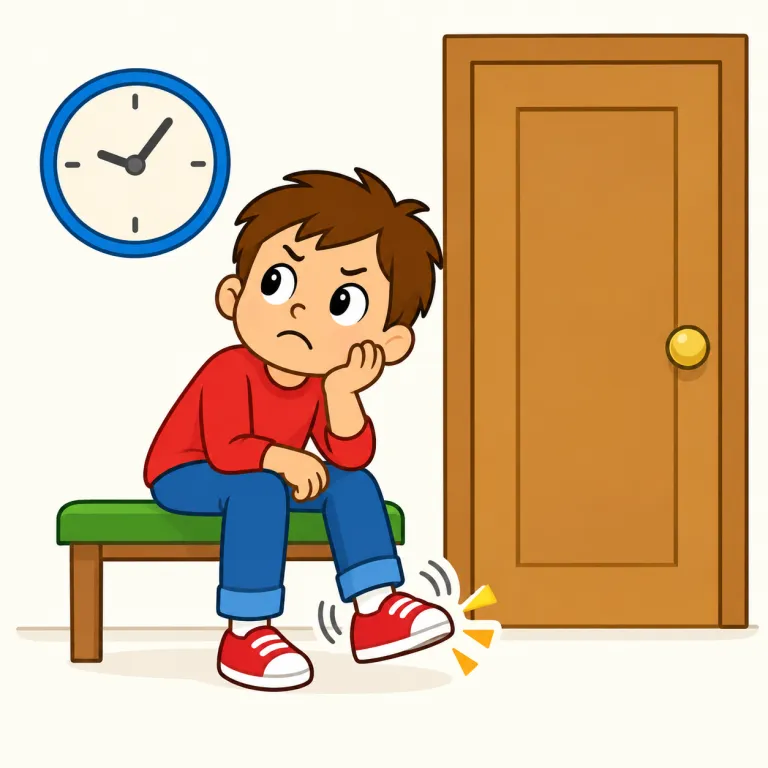
impatiently を覚えるポイント・使い方
impatiently は、待つことや動作の遅さに我慢できず「せっかちに」振る舞う様子を表す副詞。動作の速さより、いらだちや待ちきれない気持ちに注目して覚えましょう。
wait impatiently for ... で「…を待ちきれない様子で待つ」。for の後に、待っている人や物を置きます。
The children waited impatiently for the bus.
子どもたちはバスを今か今かと待っていました。
せっかちに
解説 Definition
待つことや動作の遅さに我慢できず、落ち着かない様子で。いらいらした態度や、待ちきれない気持ちを動作に添える。
In an irritated, restless, or eager manner caused by an unwillingness or inability to wait for someone, something, or a delayed result. It modifies an action to show the person's lack of patience.
使い方 Usage
- wait impatiently「待ちきれない様子で待つ」、tap one's foot impatiently「いらいらして足をとんとん鳴らす」など、待てない気持ちが表れる動作に添える。 Use wait impatiently or tap one's foot impatiently for actions that show difficulty waiting calmly. One's refers to the person doing the action.
- look impatiently at a screen や speak impatiently のように、視線や話し方にも使い、遅さへのいらだちを表せる。 Look impatiently at a screen and speak impatiently can describe a look or a way of speaking that shows irritation at slowness.
使い分け Common distinctions
- quickly は動作の速さを表す。impatiently は、待つことや遅さに耐えられない気持ちを表す。 Quickly describes the speed of an action. Impatiently describes the person's difficulty tolerating waiting or slowness.
覚え方のコツ Memory Tip
patient「辛抱強い」に否定の im-、さらに副詞を作る -ly が付いた形。遅いバスを待ち、足をとんとん鳴らす人を思い浮かべよう。
Start with patient, meaning able to wait calmly. Im- reverses that quality, and -ly makes an adverb. Picture someone tapping a foot while waiting for a slow bus.
例文
He tapped his foot impatiently.
彼はいらいらした様子で足をとんとん鳴らしました。
The children waited impatiently for the bus.
子どもたちはバスを今か今かと待っていました。
She looked impatiently at the slow computer screen.
彼女は動きの遅いパソコン画面をいらいらした様子で見ました。
impatiently の類義語・関連語
類義語
impatiently の語源・成り立ち Etymology
ラテン語 in-(否定)+ pati(耐える)+ -ens(形容詞語尾)+ -ly(副詞語尾)が起源。「耐えられない様子で」が原義。同根語に patient(忍耐強い)、passion(情熱←苦しみに耐えること)がある。我慢できない心情が「せっかちに」という意味に発展した。
Impatiently is formed from impatient and the adverbial suffix -ly. Impatient entered English through French and Latin. Its Latin source is related to impatiens, built from the negative prefix in- and a form of pati, “to suffer or endure.” Before p, in- appears as im-. The resulting sense is literally connected with being unable or unwilling to endure, while -ly makes the word describe the manner of an action.
同じレベルの語彙をもっと
外部辞書で調べる
この英単語をクイズで覚えよう