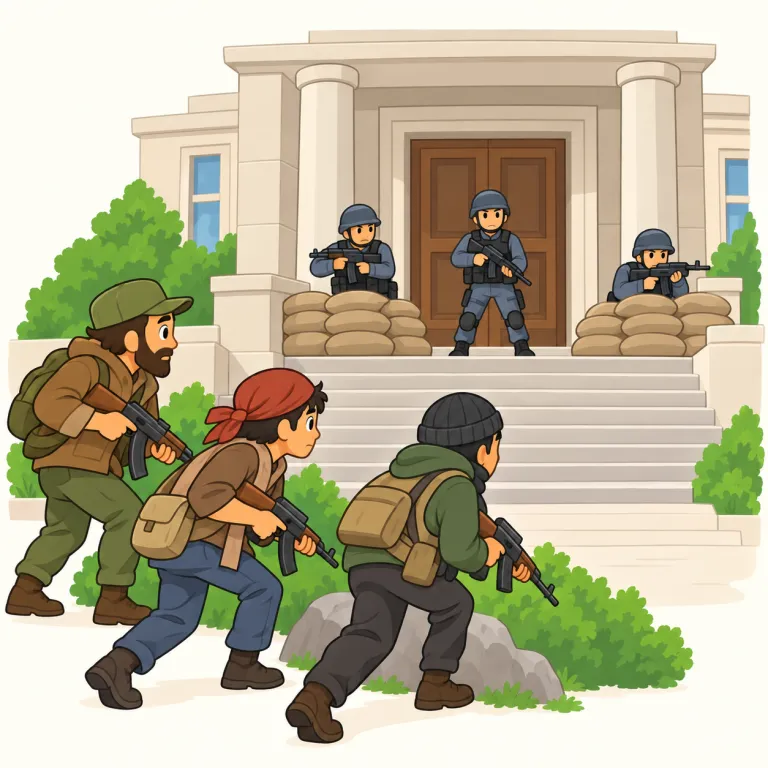
反乱軍
解説 Definition
反政府勢力や既成の権力に対抗する者。政治的または武装した反乱を起こす側。
An insurgent is a person who fights against a government or authority, usually as part of a rebel group. The word is common in political and military contexts. It often suggests an organized attempt to challenge power by force.
覚え方のコツ Memory Tip
insurgent は in + surg(ent) と見て、「内側から勢いよく立ち上がる側」と捉えると記憶しやすい。surge(急上昇する、どっと押し寄せる)を知っていれば、支配体制に対して人や力が一気に盛り返してくる感じがつかめる。ニュース英語では insurgent group, insurgent forces, insurgent attack の形が多く、単なる protester や rebel よりも、反政府・武装組織という硬い響きがある。urgent と見間違えやすいが、こちらは「緊急」ではなく「反乱側」。
Focus on common news phrases like `insurgent group`, `insurgent forces`, and `insurgent movement`. Those collocations push you to think of an organized armed group, not just one person. Also keep it separate from the similar-looking `urgent`.
例文
The insurgents attacked the government.
反乱軍は政府を攻撃した。
Insurgent forces were active in the region.
反乱軍の勢力がその地域で活動していた。
The government fought the insurgents.
政府は反乱軍と戦った。
insurgent の類義語・関連語
類義語
対義語
紛らわしい語
insurgent の語源・成り立ち Etymology
insurgent はラテン語 insurgere「立ち上がる」に由来し、in-「上へ」+ surg-「起きる」という分解で考えられます。支配に対して「起き上がる人」がそのまま反乱者になった語で、動作の勢いが意味に残っています。surge、insurrection が同根です。
Insurgent comes from Latin insurgere, meaning "to rise up." It combines in- in the sense of "up" with surgere, "to rise," a root also seen in surge and insurrection. The word kept the strong image of standing up against authority, which led to its later use for rebels.
同じレベルの語彙をもっと
外部辞書で調べる
この英単語をクイズで覚えよう