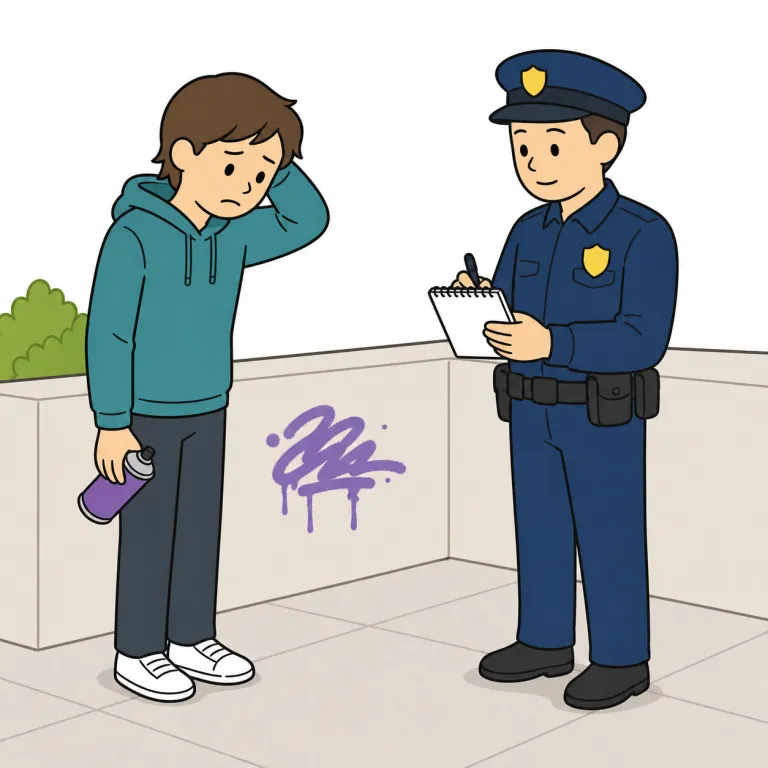
軽い不品行、ちょっとした過ち
noun 名詞法的な犯罪分類ではなく、社会的・道徳的に好ましくない軽い行為や過失を指す。深刻な悪事ではない失礼、規則違反、若気の至りなどについて、やや改まった調子で使われる。
重大な犯罪より軽い犯罪行為。違反行為や軽犯罪として法的に分類される行為を指す。
A misdemeanour is a minor crime that is less serious than a major crime such as a felony. It is a legal term used in law and court contexts. This is the British spelling; American English usually spells it misdemeanor.
mis- は misjudge, misunderstand の mis- と同じで「悪く・誤って」の合図。まず“良くない行為”という輪郭をつかみ、そのうえで法律では felony より軽い側に置かれる語だと整理すると覚えやすい。crime 全般ではなく、charged with a misdemeanor や minor misdemeanor のように「起訴・違反」の文脈で出やすい。なお英国綴りは misdemeanour、米国綴りは misdemeanor。u の有無だけが違う同語としてセットで固定すると混乱しにくい。
Use `mis-` as your signal for something wrong or bad. Then remember the legal contrast: a `misdemeanour` is lighter than a `felony`, so it belongs on the less serious side of crime words. Also lock in the spelling pair: British English uses `misdemeanour`, while American English uses `misdemeanor`.
He was charged with a misdemeanour for trespassing.
彼は軽犯罪に当たる不法侵入の罪で起訴された。
The traffic offence was treated as a misdemeanour.
その交通違反は軽犯罪として扱われた。
First-time misdemeanour offenders often receive probation.
初犯の軽犯罪者はしばしば保護観察を受ける。
文脈によって、次の意味でも使われます。
法的な犯罪分類ではなく、社会的・道徳的に好ましくない軽い行為や過失を指す。深刻な悪事ではない失礼、規則違反、若気の至りなどについて、やや改まった調子で使われる。
misdemeanour は mis-「悪く・誤って」+中英語 demenure「ふるまい」からでき、原義は「よくない行い」です。demenure は古フランス語経由で「導く・扱う」に通じ、demeanour と同根なので、悪いふるまいが法的に「軽犯罪」へ特化した流れがわかります。
Misdemeanour is made from mis-, meaning "badly" or "wrongly," and demeanour, meaning "conduct" or "behavior." The second part came through Anglo-French and Old French forms connected with managing or conducting oneself. The word first meant bad behavior in general, and later became a legal term for a less serious crime. It is closely related to demeanour.
この英単語をクイズで覚えよう