わいせつな、下品な
adjective 形容詞話・冗談・出版物などが性的に露骨で、品がないことを表す主に英国の口語表現。「a mucky joke」のように名詞の前で使われ、泥による汚れではなく、内容がわいせつで下品だという評価を示す。
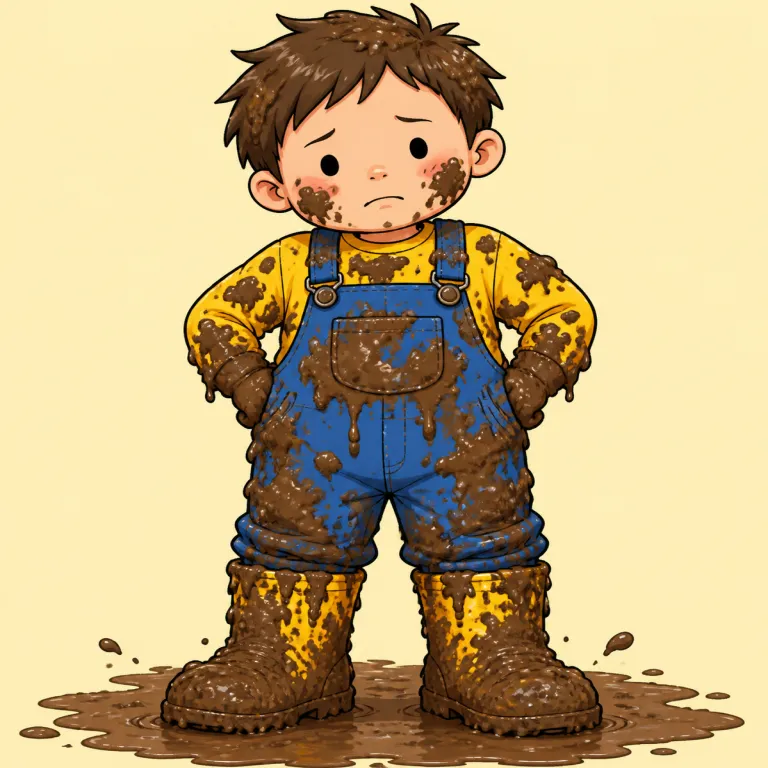
主に口語で、泥や土でひどく汚れていること、または不潔で汚らしい状態を表す形容詞です。子どもの服や靴、ぬかるんだ場所などに使われることが多く、きれいではない見た目や状態をくだけた調子で述べるときに用いられます。
Mucky means dirty, wet, and often covered with mud or unpleasant matter. It is commonly used for ground, water, clothes, or places that feel messy and unclean.
muck が「ぬかるみ・汚れ」、-y が「〜っぽい」と見れば、mucky は「泥っぽくてベタッと汚い」とまとまりで覚えやすいです。dirty よりも、泥や土でぐちゃっと汚れた見た目をくだけて言う感じで、mucky shoes, mucky clothes, a mucky field などが定番。muddy は単に泥がある状態、mucky はもっと不潔で汚らしい印象まで含みやすい、と区別すると残ります。
See the base word `muck`, meaning dirt or muddy mess, then add `-y` for "full of" or "like." That gives a strong image of something messy and unpleasant, not just a little dirty. It is easy to remember with common pairs like `mucky shoes` or `mucky clothes`.
After playing in the garden, the children were mucky and tired.
庭で遊んだあと、子どもたちは泥だらけで疲れていた。
The mucky field made the football match very difficult.
泥だらけのグラウンドのせいで、サッカーの試合はとてもやりにくかった。
She complained about getting her new dress mucky while exploring.
探検しているうちに新しいドレスが泥で汚れてしまったと、彼女は不満をこぼした。
文脈によって、次の意味でも使われます。
話・冗談・出版物などが性的に露骨で、品がないことを表す主に英国の口語表現。「a mucky joke」のように名詞の前で使われ、泥による汚れではなく、内容がわいせつで下品だという評価を示す。
mucky は muck「ぬかるみ・汚物」に、形容詞を作る接尾辞 -y が付いた語です。muck は古ノルド語 myki「牛糞」系にさかのぼるとされ、もともと「糞や泥でべたついた感じ」なので、「汚い」という意味が自然につながります。関連語は muck, muckrake。
Mucky comes from muck plus the adjective ending -y. Muck is probably from Old Norse myki, meaning "dung," so the original feeling of the word was being smeared with filth or mud. That physical sense naturally led to the broader idea of being dirty or messy; compare muck and muckrake.
この英単語をクイズで覚えよう