くだらないもの、粗悪品
noun 名詞主にイギリス英語のくだけた表現で、価値のないもの、質の悪い作品、くだらない話などを指します。物理的な「泥・汚物」ではなく、内容や品質への強い否定的評価を表す不可算名詞です。
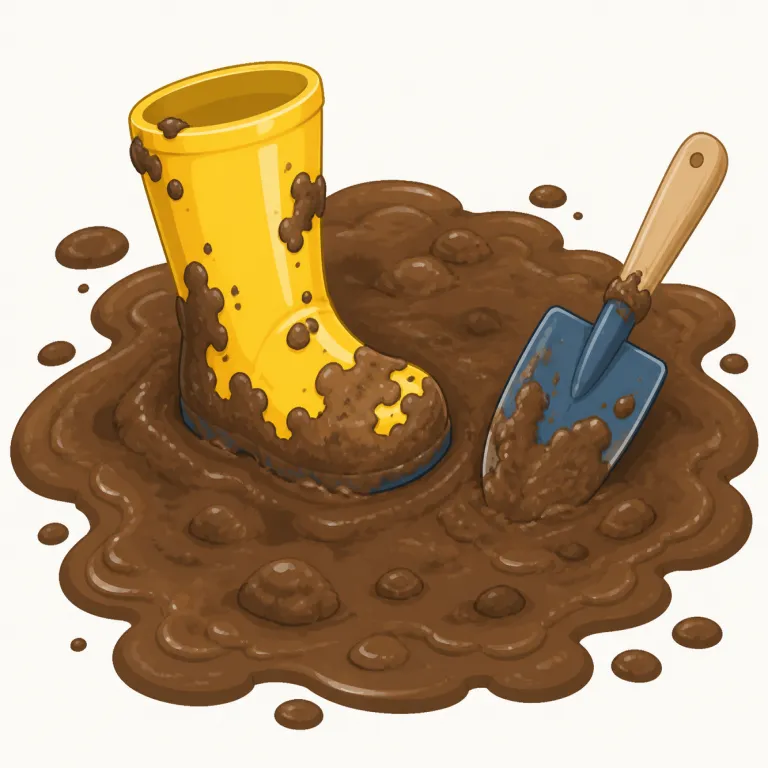
muck は英検1級レベルの英単語で、「泥」という意味があります。発音記号は /mʌk/ です。
泥や汚い物質のこと。また動物の排泄物や肥料、または不潔で汚い状態を指す。
Muck is thick, wet dirt or mud, often mixed with waste or decaying material. It is commonly used for very dirty natural matter on the ground or in farms and fields. In informal use, it can also suggest something messy, unpleasant, or of poor quality.
mud を知っていれば、そのさらに不潔版が muck。mud はただの泥でも言えるが、muck は生ごみ・家畜小屋・肥やしまで混ざった、においまでしそうな汚さを含みやすい。『道が muddy』より『長靴で入ると沈みそうな、汚物まじりのぬかるみ』を映像で持つと残る。mucky で『泥だらけの』、muck out で『厩舎の汚物をかき出す』もセットで覚えると、単なる dirt ではない重たい汚れの語感が定着する。
If `mud` is dirty ground, `muck` is the nastier version. It suggests wet, thick, unpleasant dirt, often mixed with waste. Remember related forms too: `mucky` and `muck out` help fix the stronger, dirtier feeling.
The farmer spread muck on the field as fertilizer.
その農家は家畜のふんを肥料として畑にまいた。
After the rain, the path was covered in muck.
雨の後、その道は泥で覆われていた。
The pig wallowed happily in the muck.
その豚は泥の中で楽しそうに転がっていた。
文脈によって、次の意味でも使われます。
主にイギリス英語のくだけた表現で、価値のないもの、質の悪い作品、くだらない話などを指します。物理的な「泥・汚物」ではなく、内容や品質への強い否定的評価を表す不可算名詞です。
muck は中英語 muk を経て、古ノルド語 myki『牛ふん・肥やし』にさかのぼる語です。もともと“ぬかるんだ汚物”の感覚が強く、そこから泥や汚れ全般を指すようになりました。関連語に mucky『泥だらけの』、muckrake があります。
Muck comes from Middle English muk, from Old Norse myki, meaning dung or manure. At first it referred to filthy animal waste, especially wet or messy waste. Later it widened to mean mud, dirt, or any unpleasant mess; related words include mucky and muckrake.
この英単語をクイズで覚えよう