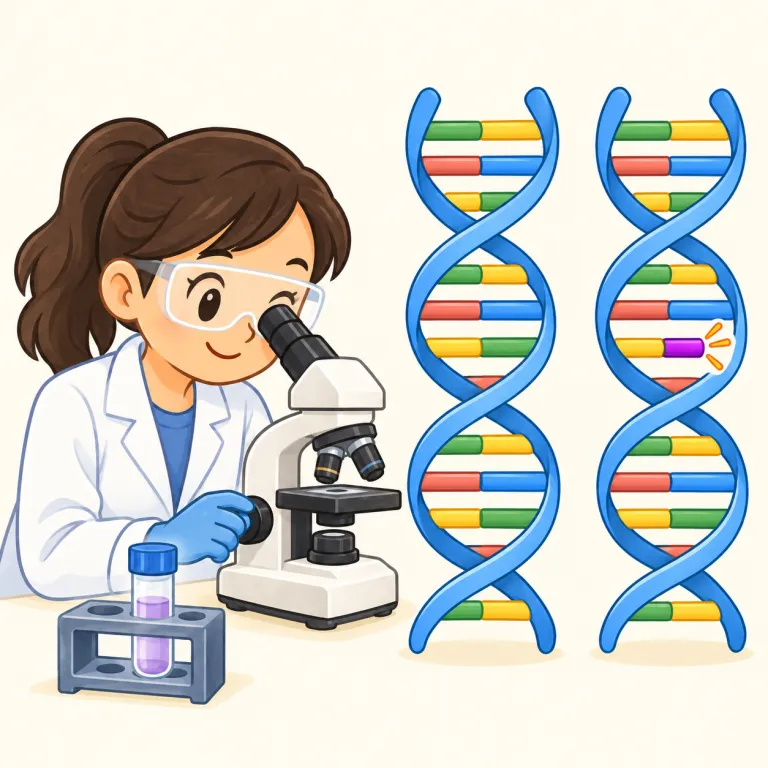
変異した
解説 Definition
mutated は mutate(変異する、変化する)の過去形・過去分詞で、形容詞としては「変異した」という意味です。主に遺伝子、細胞、ウイルスなどが通常とは異なる形に変化したことを表します。
Mutated describes a gene, cell, organism, virus, or other biological entity that has undergone a mutation and therefore differs from its earlier or usual form. It is also the past tense and past participle of the verb mutate.
覚え方のコツ Memory Tip
mutated は動詞 mutate「変異する・変化させる」に -ed を付けた過去形・過去分詞で、形容詞なら「変異した」。mutate の末尾 e を残して d だけを加え、発音は /ˈmjuːteɪtɪd/ と末尾が /ɪd/ になる。mutated gene、mutated virus、mutated cells のまとまりで覚える。
Start with the base verb mutate, “to undergo or cause a genetic or structural change.” Because mutate already ends in silent e, its past form is made by adding only d: mutate → mutated. The final sound is /ɪd/, giving /ˈmjuːteɪtɪd/, because the base ends in /t/. As an adjective, mutated commonly appears before biological nouns in combinations such as mutated gene, mutated virus, and mutated cells. Link it with mutation, the noun for the change itself, while remembering that mutated describes what has already undergone that change.
例文
The lab found a mutated gene in the sample.
研究所はそのサンプルから変異した遺伝子を見つけました。
Scientists studied how the mutated virus spread in the region.
科学者たちは、その地域で変異したウイルスがどのように広がったかを調べました。
The mutated cells reacted differently to the treatment.
変異した細胞は、その治療に対して異なる反応を示しました。
mutated の類義語・関連語
mutated の語源・成り立ち Etymology
ラテン語「mutare(変える)」由来で、「mut-(変化)」が語根です。接尾辞で形容詞化され、「commute(交換する)」や「immutable(不変の)」と同じ仲間です。『根本から姿や性質を替える』という語源イメージが、遺伝子や形状が「変異した」という意味にすっきり結びつきます。
Mutated is formed from mutate plus the past-participle ending -ed. Mutate entered English through Latin mutatus, the past participle of mutare, “to change.” The root expresses change and also appears in mutation and immutable, where the prefix im- creates the contrasting idea “unable to change.” In modern biological use, mutated describes genetic material, cells, organisms, or viruses that have undergone a mutation.
同じレベルの語彙をもっと
外部辞書で調べる
この英単語をクイズで覚えよう