変化、変形
noun 名詞物事の形・性質・状態が大きく変わることを表す、やや硬い用法です。生物の遺伝的変化に限らず、制度や思想などが別の姿へ変化する過程についても使われます。
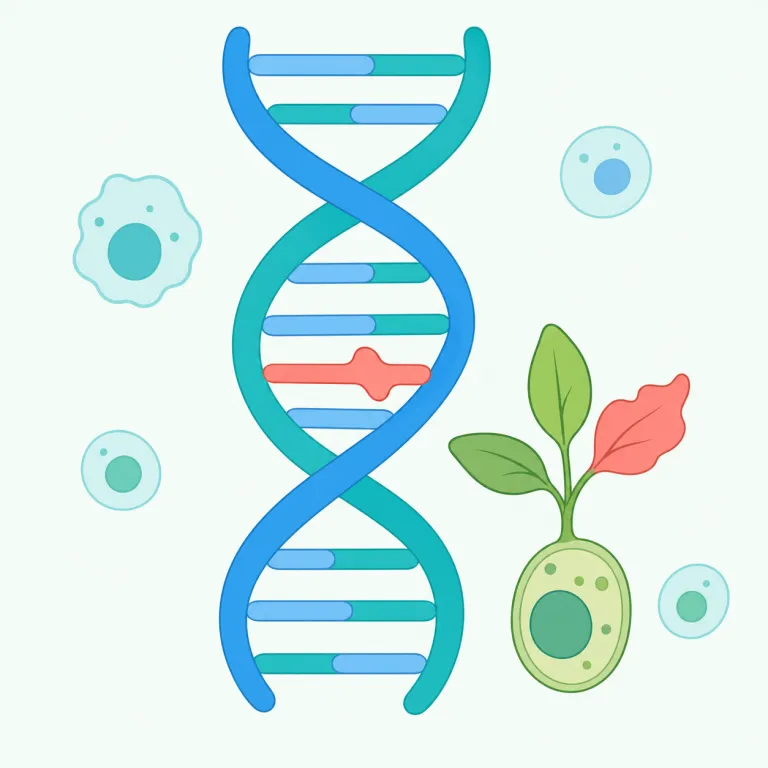
mutation はTOEFL 100・IELTS 7.5レベルの英単語で、「突然変異」という意味があります。発音記号は /mjuːˈteɪʃən/ です。
生き物が親と異なる新しい形質を突然示す現象。遺伝子の変化による変異。
Mutation is a change in the genes of a living thing. It is mainly used in biology and medicine when talking about DNA and inherited traits. Some mutations have little effect, while others can change how an organism develops or functions.
核は mut-「変わる」で、mutate(変化する)→ mutation(変化そのもの)→ mutant(変異体)を1セットで覚えると定着しやすいです。-tion が付くので「行為・過程を表す名詞」と見抜けます。生物では gene mutation, DNA mutation, random mutation の形でよく出るので、単なる variation「違い」ではなく、「遺伝子が変わって新しい形質が現れること」を指す語だと区別すると残りやすいです。adaptation のような後天的な適応とも分けておくと混同しません。
Build a small family: `mutate` is the action, `mutation` is the process or result, and `mutant` is the changed living thing. The ending `-tion` is a strong clue that this is a noun. Keeping those three together makes the word much easier to remember.
Mutation is the process of genetic change.
突然変異は遺伝的変化のプロセスである。
The mutation caused a change in eye color.
その突然変異は目の色の変化を引き起こした。
Scientists study mutation to understand evolution.
科学者たちは進化を理解するために突然変異を研究する。
文脈によって、次の意味でも使われます。
物事の形・性質・状態が大きく変わることを表す、やや硬い用法です。生物の遺伝的変化に限らず、制度や思想などが別の姿へ変化する過程についても使われます。
mutation はラテン語 mutatio に由来し、語根 mut- は「変える」、-ation は「作用・過程」を表します。mutant や transmute も同根で、結果よりまず『変化が起こることそのもの』が核だと分かると、生物学での「突然変異」も理解しやすくなります。
Mutation comes from Latin mutatio, from mutare, meaning "to change." The ending -ation adds the sense of an action or process, so the word originally meant the act of changing. It shares its root with mutant and transmute, and later became a technical term for change in form or structure, especially in biology.
この英単語をクイズで覚えよう