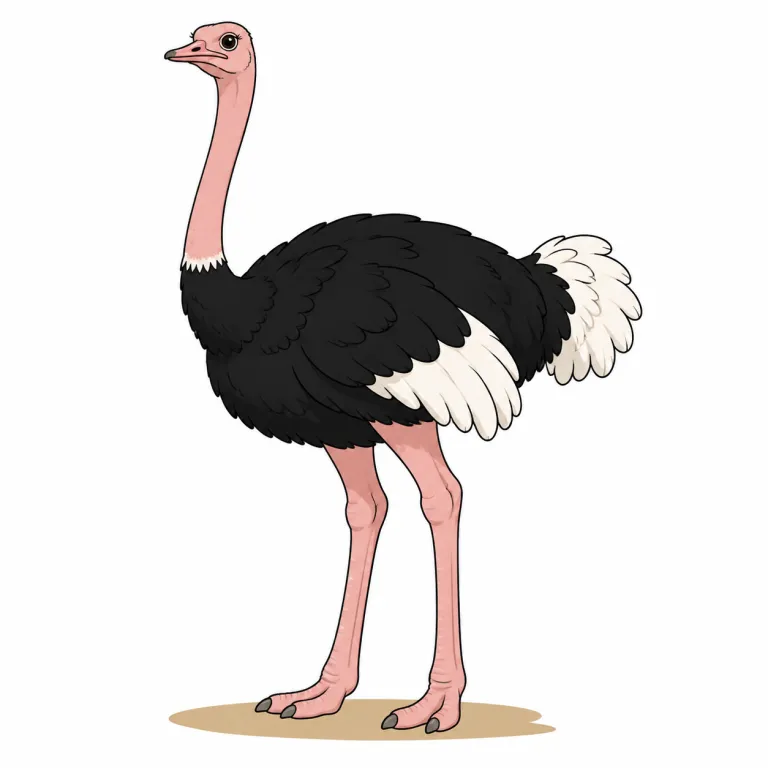
ダチョウ
解説 Definition
ダチョウはアフリカ原産の大型の飛べない鳥で、長い首と脚をもち、乾燥した草原を速く走って身を守る。羽毛は黒と白があり、雄は繁殖期に鮮やかな色合いを帯びる。危険を感じると地面に伏せて頭を低くするように見えることから、現実から目をそらす人をたとえる表現にも使われる。
An ostrich is a very large bird that cannot fly and is known for its long legs and neck. In informal use, it can also describe a person who avoids unpleasant facts instead of facing them.
覚え方のコツ Memory Tip
ostrich は、長い首と脚、小さな頭、大きな胴体をもつ「ダチョウ」の姿を一枚の絵として固定するのが近道です。アフリカの grassland を高速で running across する、飛べない大型鳥と覚えましょう。bird だけでなく flightless bird(飛べない鳥)、an ostrich egg(ダチョウの卵)、an ostrich can kick hard(強く蹴る)という組み合わせが実用的。発音は語尾を「リッチ」ではなく /ɪtʃ/ と短く止める点も押さえると定着します。
Remember the image of an ostrich with its head in the sand. In figurative use, an `ostrich` is someone who avoids unpleasant facts instead of facing them. It often appears in phrases like `act like an ostrich` or `ostrich policy`.
例文
He watched an ostrich running across the grassland.
彼は草原を走るダチョウを見ていた。
Don't get too close to an ostrich; it can kick hard.
ダチョウに近づきすぎてはいけません。強く蹴ることがあります。
She saw an ostrich lower its head toward the sand.
彼女はダチョウが砂のほうへ頭を低くするのを見た。
ostrich の類義語・関連語
ostrich の語源・成り立ち Etymology
ostrich は古フランス語を経て、俗ラテン語 avis struthio、さらにギリシャ語 strouthion にさかのぼります。avis は「鳥」で、もとは鳥名そのものですが、危険時に頭を砂へ隠すという俗信から「現実を見ない人」の比喩に広がりました。関連語に avian と struthious があります。
Ostrich came through Old French and Late Latin from Greek strouthion, a word for a bird, especially a large bird. In Late Latin it appeared in forms like avis struthio, with avis meaning "bird." The name was passed into English as the ordinary word for this big bird; related learned words include avian and struthious.
同じレベルの英単語をもっと
外部辞書で調べる
この単語を英単語クイズで覚えよう