激怒した
解説 Definition
「激怒した、強く憤慨した」を表す形容詞です。不公平・不快・受け入れがたいと感じることに対して、驚きや非難を伴う強い怒りを表します。
Feeling extremely angry and shocked because something seems seriously unfair, offensive, or unacceptable. It commonly appears after be or feel and may be followed by at, by, over, or a clause explaining the cause.
使い方 Usage
使い分け Common distinctions
- angry より強い怒りを表すことが多く、不公平さへの驚きや道徳的な非難を含みやすい語です。 Compared with angry, outraged often expresses stronger anger and suggests shock at unfairness or moral disapproval.
覚え方のコツ Memory Tip
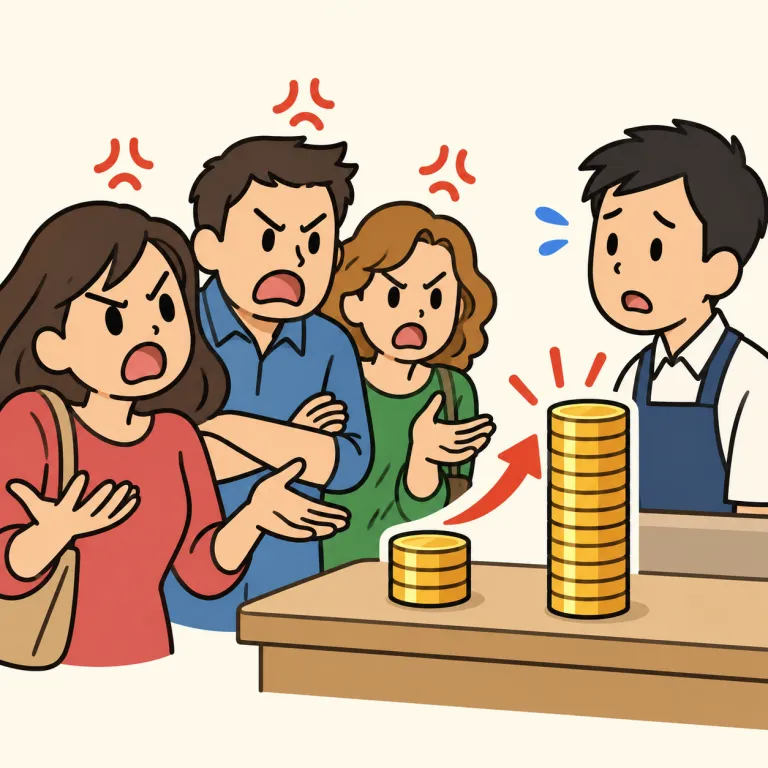
outrage「憤慨させる」の過去形・過去分詞に由来する形です。不正に強く憤る顔を思い浮かべましょう。-ed は /d/ と発音し、全体は /aʊtˈreɪdʒd/ です。
Outraged comes from the past tense and past participle of outrage. Picture someone strongly protesting an injustice. The -ed ending is pronounced /d/, giving /aʊtˈreɪdʒd/.
例文
The customers were outraged by the sudden price change.
客たちは突然の価格変更に激怒しました。
She felt outraged when she heard the unfair decision.
彼女はその不公平な決定を聞いて激怒しました。
Many residents were outraged because the city closed the park without warning.
市が予告なしに公園を閉鎖したため、多くの住民が激怒しました。
outraged の類義語・関連語
類義語
outraged の語源・成り立ち Etymology
古フランス語 outrage(暴行、侮辱)から派生し、語源はラテン語 ultra(超えて)に遡る。「限度を超えた行為」が原義で、そこから「激しい怒り」の意味に転じた。関連語: outrageous(言語道断な)、ultra(極端な)。度を越されたから怒るという感覚が核にある。
Outraged is formed from outrage plus the past-tense or participial suffix -ed. Outrage entered English through Old French outrage, referring to excess, insult, violence, or an act beyond acceptable limits. The French formation is ultimately connected with Latin ultra, “beyond.” The modern emotional sense reflects the reaction to conduct regarded as exceeding the bounds of fairness or decency.
同じレベルの語彙をもっと
外部辞書で調べる
この英単語をクイズで覚えよう