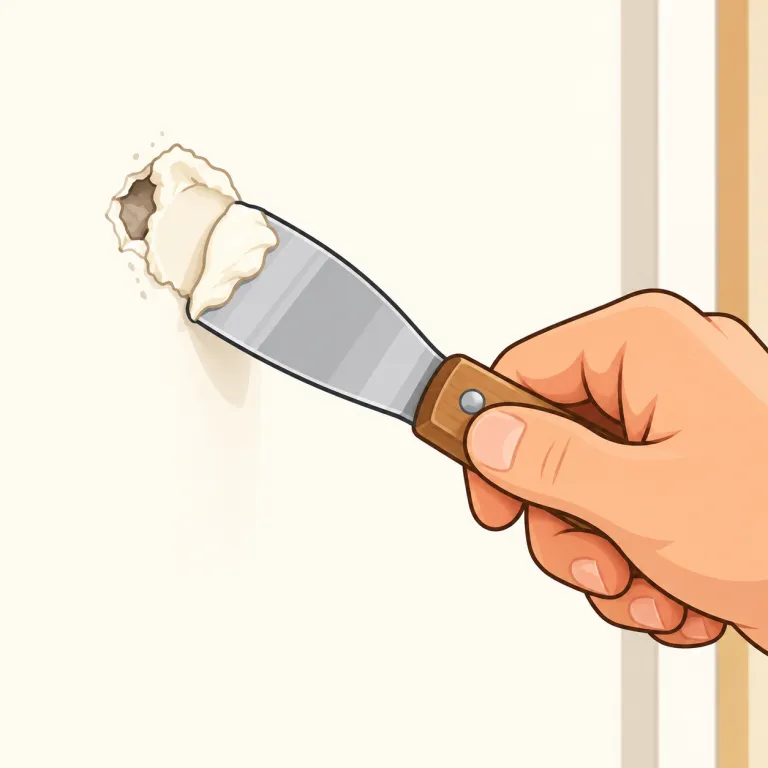
パテ
解説 Definition
壁や木材、窓枠などの穴やすき間を埋める、柔らかく形を整えられる補修材「パテ」。通常は乾燥や硬化によって固くなる。
A soft, moldable material used to fill holes, cracks, or gaps and to seal or repair surfaces such as wood, walls, and window frames. It usually becomes firmer as it dries or cures.
使い方 Usage
使い分け Common distinctions
- 日本語の「パテ」に近いが、接着剤・ペースト・セメント全般を指す語ではない。 Putty is close in meaning to Japanese パテ, but it is not a general term for all glue, paste, or cement.
覚え方のコツ Memory Tip
日本語の「パテ」と結び付け、穴を埋めて表面をならし、乾くのを待つ作業を思い浮かべる。英語の発音はおおむね「パティ」と覚える。
Link putty with Japanese パテ and picture filling a hole, smoothing the surface, and waiting for it to dry. Remember the English pronunciation, roughly “PUT-ee.”
例文
He filled the small hole with putty.
彼は小さな穴をパテで埋めました。
The putty dried around the window frame.
窓枠の周りのパテが乾きました。
She smoothed the putty before painting the wall.
彼女は壁を塗る前にパテの表面をなめらかにしました。
putty の類義語・関連語
putty の語源・成り立ち Etymology
中世フランス語「potée(鉢いっぱい)」に由来し、ラテン語の容器語を語根とする。「pot(鍋)」を中核とし、柔らかい素材が当初「鍋に入れて保管・計量された」ことから容器名がそのまま物質名へ転じたのが理解の鍵だ。同語根語に「pot(鍋)」「potion(飲む薬)」がある。
Putty entered English through French potée, a word connected with pot and originally referring to the contents or quantity of a pot. Its deeper history is associated with the Late Latin potta, “pot.” The precise semantic development into the name of a soft sealing material is not completely transparent, so the secure memory point is the established French-to-English word history rather than a specific story about how the substance was stored.
同じレベルの語彙をもっと
外部辞書で調べる
この英単語をクイズで覚えよう