とりとめなく話す、長々と書く
verb 動詞話題を次々に変えながら、要点や明確な順序なしに長く話したり書いたりすることを表す。ramble on about ... や ramble on の形が典型的で、単に詳しく説明する場合より、まとまりのなさを含意する。
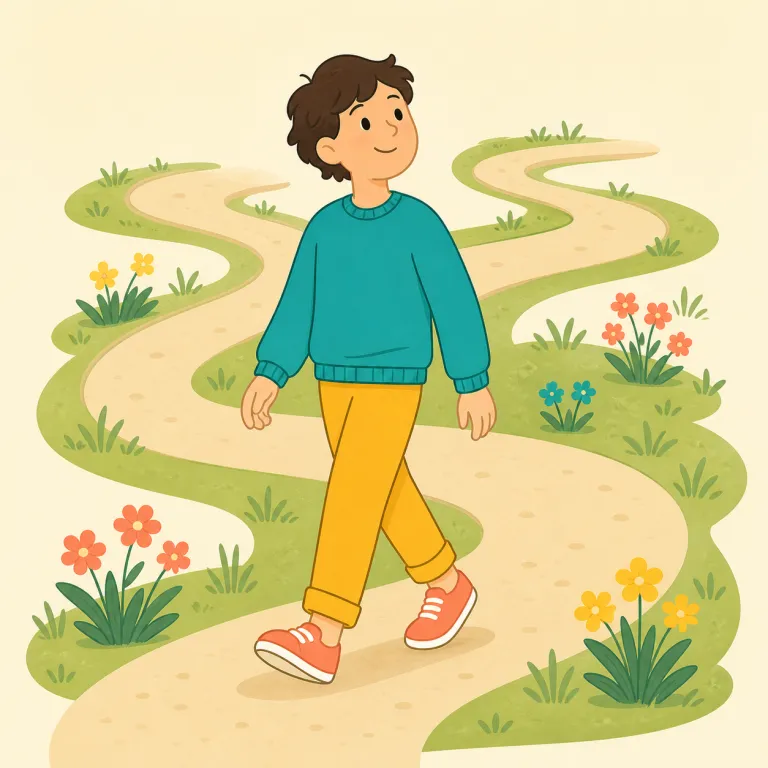
ある場所をぶらぶらと歩き回ること。特に楽しみや運動のために、目的地を決めずに散策すること。自然の中を気ままに歩く行為を指す。
To ramble means to walk slowly and casually without a fixed plan or clear destination. It is often used for relaxed walks in the countryside or for moving around just to enjoy the surroundings.
ramble は「まっすぐ目的地へ行く walk」ではなく、気の向くままにあちこち動く感じで覚える。roam や wander に近いが、迷う・さまようほど深刻ではなく、stroll よりも道筋が決まっていない。特に countryside や woods などで、楽しみや気分転換のために歩く文脈でよく出る。go for a ramble, ramble through the woods をまとまりで覚えると強い。rambling には「話がまとまらない」の意味もあり、「あちこち逸れて進む」という共通イメージで結ぶと定着しやすい。
Think of `ramble` as a relaxed walk with no fixed path. It is closer to `wander` or `roam` than to a straight, purposeful `walk`, and it is often used in nature. Remember chunks like `go for a ramble` and `ramble through the woods`.
We decided to ramble through the countryside for the afternoon.
私たちは午後、田舎をぶらぶら歩くことにした。
The old man enjoys rambling in the forest every weekend.
その老人は毎週末森の中を散策するのが好きだ。
During our vacation, we rambled along the coastal paths.
休暇中、私たちは海沿いの道をぶらぶら歩いた。
文脈によって、次の意味でも使われます。
話題を次々に変えながら、要点や明確な順序なしに長く話したり書いたりすることを表す。ramble on about ... や ramble on の形が典型的で、単に詳しく説明する場合より、まとまりのなさを含意する。
ramble は中英語からで、さらにゲルマン系の『騒がしく歩き回る』感覚の語に通じます。ramb- に明確な接頭辞はなく、あてもなく動き続けるイメージが核です。rambling や rambler も同根で、『まとまらずぶらつく』感じがそのまま意味に残っています。
Ramble comes from Middle English and is linked to Germanic words about moving around noisily or loosely. It does not have a clear prefix, but its core sense was wandering without a fixed path. That idea later also shaped rambling and rambler in English.
この英単語をクイズで覚えよう