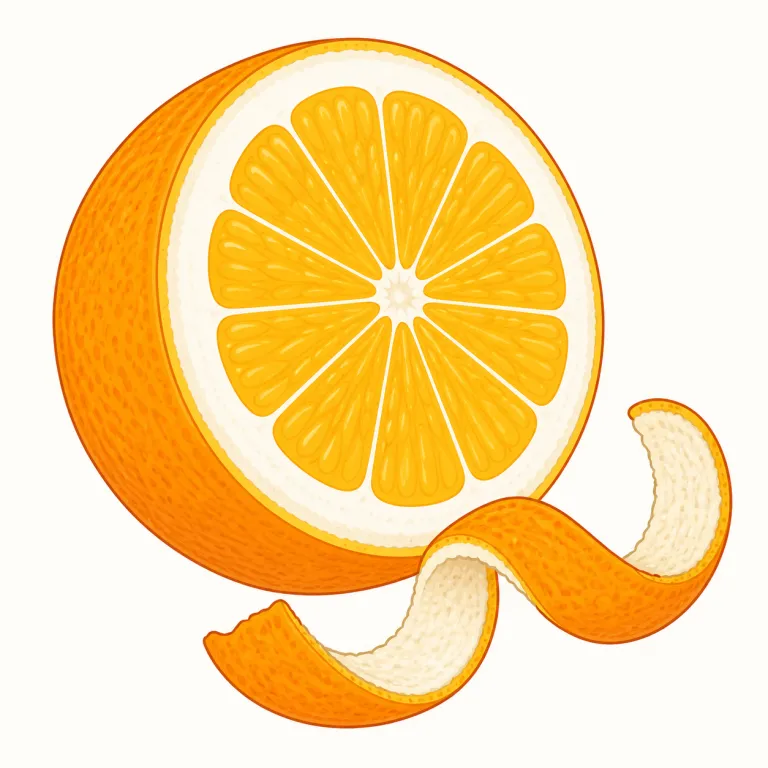
rind
rind は英検1級レベルの英単語で、「皮」という意味があります。発音記号は /raɪnd/ です。
皮
解説 Definition
果物や野菜の外側の硬い皮のことです。リンゴやスイカなど、多くの食べ物は外側に丈夫な保護層としての皮を持っています。
Rind is the thick outer skin or covering of some fruits, cheeses, or similar foods. It is commonly used for oranges, lemons, and melons. A rind is usually firmer and less soft than the inside part.
覚え方のコツ Memory Tip
rind は『硬めで厚い外皮』をまとめて覚えると残りやすいです。orange rind, watermelon rind, cheese rind のように、食べ物の外側で中身を守る層によく使います。peel は『むく行為・むいた皮』、skin はもっと薄くやわらかい皮なので、rind はそれよりゴツい感じ。果物やチーズで『外側のしっかりした皮』を見たら rind を連想すると定着しやすいです。
Remember `rind` as the thick, firm outer layer of food. Think of `orange rind`, `watermelon rind`, or `cheese rind` rather than thin skin. This helps separate it from `peel`, which often focuses on removing the outer part, and `skin`, which sounds softer and thinner.
例文
The lemon rind is thicker than usual this year.
今年のレモンの皮はいつもより厚いです。
Don't throw away the orange rind; it can be used for flavoring.
オレンジの皮を捨てないでください。香り付けに使えます。
The watermelon rind was so hard it was difficult to cut through.
スイカの皮がとても硬くて、切るのが難しかったです。
rind の語源・成り立ち Etymology
rind は古英語 rinde「樹皮・外皮」に由来する英語本来語で、接辞分解よりも「物を包む外側」という古い感覚が核です。ドイツ語 Rinde や rindless も同系で、中身を守る皮だから果物やチーズの皮を指すと腑に落ちます。
Rind is an old native English word from Old English rinde, meaning "bark" or "outer covering." Its core idea has long been the outside layer that covers and protects what is inside. That is why it came to be used for the skin of fruit, cheese, and similar things. It is related to German Rinde.
同じレベルの語彙をもっと
英検1級の一覧へ →外部辞書で調べる
この英単語をクイズで覚えよう