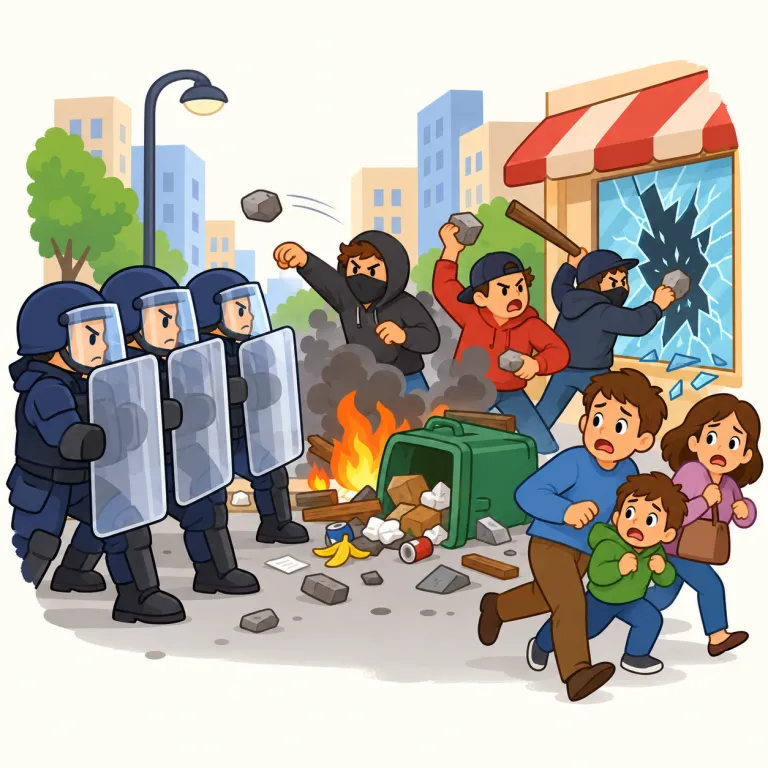
暴動
解説 Definition
rioting は riot の動名詞・名詞形で、群衆が公共の場で暴力的に騒ぐ「暴動」や、暴動を起こすことを表します。
Rioting is violent and disorderly public behavior by a crowd, often involving attacks, destruction, or looting. It refers to the act or continuing occurrence of a riot and is more serious than an ordinary protest or noisy gathering.
使い方 Usage
使い分け Common distinctions
- protesting は平和的な抗議も含みますが、rioting は暴力的な騒乱を表します。 Protesting can include peaceful demonstrations, while rioting describes violent public disorder.
覚え方のコツ Memory Tip
riot に -ing をそのまま付けた形で、発音は /ˈraɪətɪŋ/ です。群衆の騒乱が暴力や破壊に発展する場面と結び付けましょう。
Rioting is riot plus -ing, with no spelling change, and is pronounced /ˈraɪətɪŋ/. Picture a crowd causing public disorder involving violence or destruction.
例文
Rioting broke out in the city center.
市の中心部で暴動が起きました。
The police tried to stop the rioting near the stadium.
警察はスタジアム近くの暴動を止めようとしました。
The mayor called for calm after a night of rioting.
一晩の暴動のあと、市長は冷静な対応を呼びかけました。
rioting の類義語・関連語
類義語
対義語
紛らわしい語
rioting の語源・成り立ち Etymology
古フランス語 riote(議論・騒ぎ)に由来し、英語で「暴動・騒乱」の意味に発展した。語根は俗ラテン語 *rugiare(吠える)とも関連づけられる。関連語: riot(暴動)、riotous(騒々しい)。集団が騒ぎ立てる様子が原義に残っている。
Rioting is formed from riot and the suffix -ing. Riot came into English from Old French riote, which referred to a dispute, quarrel, uproar, or disturbance. In English, its meaning developed toward violent public disorder involving a group. The deeper origin of the Old French word is uncertain, so proposed connections should be treated cautiously. Modern rioting transparently means the activity or continuing occurrence of a riot, whether used as a gerund, participle, or mass noun.
同じレベルの語彙をもっと
外部辞書で調べる
この英単語をクイズで覚えよう